April 1, 2025

Jaipur is famous for its forts, palaces, markets and pink-hued architecture, but water has also played an important role in the region’s history and landscape. The city and its surrounding areas contain historic reservoirs, palace lakes, seasonal wetlands and the extraordinary salt flats of Sambhar. Together, these places offer visitors a different perspective on the Pink City.
The scenic lakes in and around Jaipur are not identical tourist attractions. Man Sagar Lake is recognised for the Jal Mahal standing in its centre, while Maota Lake contributes to the magnificent approach to Amer Palace. Chandlai attracts nature and birdwatching enthusiasts, whereas Sambhar presents a vast saline landscape unlike anything found within the city.
This guide explains which lakes are genuinely worth considering, what makes each one distinctive and what visitors should realistically expect. Water levels, access conditions and bird sightings can change with the season, so it is always sensible to confirm local conditions before beginning a longer journey.
Which Are the Best Lakes in Jaipur and Nearby Areas?
For a first visit, Man Sagar Lake, Maota Lake, Sagar Lake, Chandlai Lake and Sambhar Salt Lake offer the strongest combination of scenery, heritage and ecological interest. Kanota Dam and Ramgarh Lake may also be considered when water and access conditions are suitable.
The right selection depends on the type of experience a traveller wants:
 Visit Man Sagar Lake for an iconic Jaipur landmark.
- Combine Maota Lake with an Amer Palace itinerary.
- Explore Sagar Lake for a quieter landscape near Amer.
- Consider Chandlai for wetland scenery and birdwatching.
- Plan a longer excursion to Sambhar for salt flats and open horizons.
- Check current conditions before visiting Kanota or Ramgarh.
These places are best appreciated as landscapes rather than amusement destinations. Facilities and public activities differ considerably, and boating should never be assumed to be available unless an authorised operator confirms it at the time of the visit.
1. Man Sagar Lake and Jal Mahal
Man Sagar Lake is the most recognisable lake in Jaipur because the beautiful Jal Mahal appears to float in its centre. The contrast between the palace’s light sandstone exterior, the surrounding water and the Aravalli hills makes it one of the city’s most photographed views.
According to Rajasthan Tourism, Jal Mahal was intended as a hunting lodge rather than a residential palace. It was associated with duck-hunting excursions during the reign of Maharaja Madho Singh I. The structure follows a Rajput architectural style and has several levels, although only its upper portion is normally visible above the water.
Most visitors view Jal Mahal from the roadside promenade along the bank of Man Sagar Lake. The palace itself is not generally open to the public, so travellers should plan this as a sightseeing and photography stop rather than a palace tour.
Early morning can provide softer light and relatively calmer surroundings. Evening is also visually appealing, although the roadside may become busy. Visitors should use designated public areas and avoid entering restricted lake zones.
Best for: Iconic views, travel photography and combining with an Amer sightseeing route.
2. Maota Lake at the Foot of Amer Palace
Maota Lake lies below Amer Palace and forms an important part of the fort’s visual setting. When viewed from the palace complex, the lake, garden and surrounding hills create one of Jaipur’s most impressive heritage landscapes.
The lake’s position makes it easy to include in an Amer itinerary. Visitors can observe it while approaching the fort and from elevated viewpoints within the palace complex. The geometric Kesar Kyari garden situated within the lake adds another distinctive element to the view.
Amer Palace stands approximately 11 kilometres from central Jaipur, according to Rajasthan Tourism. Actual travel time varies significantly with the starting point, traffic and season, so visitors should avoid planning the journey solely according to distance.
Maota is primarily valuable for its relationship with Amer’s architecture. Its most rewarding perspectives usually come from the fort and surrounding viewpoints rather than from treating it as an independent recreation spot.
Water levels and reflections can vary according to rainfall and maintenance conditions. Even so, its connection with Amer makes it one of the most important historical lakes in Jaipur.
Best for: Heritage views, architectural photography and an Amer Palace visit.
3. Sagar Lake Near Amer
Sagar Lake, sometimes described locally as Sagar or Amer Sagar, offers a quieter landscape beyond the busiest sections of the Amer tourist circuit. Hills surround the water body, giving the area a more secluded character than the heavily visited Jal Mahal promenade.
Its appeal depends considerably on the season. During and after a productive monsoon, the landscape may appear greener and the water level can improve. During dry periods, visitors may encounter a noticeably different scene.
Sagar Lake is better suited to travellers interested in landscape observation than those expecting organised tourist entertainment. Access roads and the condition of the surrounding area may change, so first-time visitors should use dependable navigation, travel during daylight and seek current local guidance.
Visitors should also avoid climbing unsafe slopes or entering isolated sections without understanding local access conditions. Photography should be conducted from stable, publicly accessible areas.
Best for: Quieter views, seasonal landscapes and travellers already exploring Amer.
4. Chandlai Lake and Wetland
Chandlai lies to the south of Jaipur and is better understood as a wetland environment than a conventional recreational lake. It attracts birdwatchers and photographers because its shallow waters and surrounding habitat can support waterbirds, particularly during favourable seasonal conditions.
Its ecological importance is not merely a promotional claim. Chandlai was among the Rajasthan wetlands covered in the state’s Asian Waterbird Census 2026. However, this does not guarantee that every visitor will see large flocks. Bird presence changes with migration patterns, water availability, weather and human disturbance.
Early morning is generally preferable for bird observation because temperatures are lower and the environment may be quieter. A pair of binoculars or a telephoto lens allows visitors to observe wildlife from a respectful distance.
Chandlai should not be treated as a boating or entertainment destination unless a currently authorised service is confirmed. Visitors should avoid loud music, feeding birds, leaving food waste or approaching nesting and resting areas.
Among the scenic lakes near Jaipur, Chandlai is most suitable for people genuinely interested in wetlands and wildlife rather than developed tourist facilities.
Best for: Birdwatching, wetland photography and responsible nature observation.
5. Sambhar Salt Lake
Sambhar Salt Lake offers the most unusual landscape in this guide. Located beyond Jaipur, it is one of India’s largest inland salt lakes and has long been connected with salt production. Depending on the season and water conditions, visitors may see shallow water, saline surfaces, broad white expanses and extensive open horizons.
Rajasthan Tourism places Sambhar roughly 70 kilometres from Jaipur, although the actual road distance depends on the chosen route and destination point around the lake. Travellers should treat it as a dedicated excursion rather than a quick city sightseeing stop.
Sambhar is also recognised as a Ramsar wetland of international importance. Its ecological character may support flamingos and other waterbirds under suitable conditions, but sightings are never guaranteed. Rainfall, salinity, water depth and migration cycles all influence what visitors encounter.
The intense light and open terrain can be demanding. Visitors should carry drinking water, sun protection and suitable footwear. They should also avoid driving onto unverified salt surfaces, which may look firm but can conceal soft or wet sections.
The landscape is highly attractive for photography, particularly when the sky, saline ground and shallow water produce strong reflections. However, travellers should respect salt-working areas, wildlife habitats, local communities and any restricted zones.
Best for: Salt-flat landscapes, wide-angle photography, wetland interest and a longer day excursion.
6. Kanota Dam and Lake
Kanota Dam lies on the eastern side of Jaipur and creates a broad water landscape when reservoir levels are favourable. Its appearance varies with rainfall, making the monsoon and post-monsoon period more visually rewarding in many years.
This is not a uniformly developed city attraction, and visitor facilities may be limited. Travellers should confirm current road, access and safety conditions before leaving Jaipur. They should not enter the water or approach dam infrastructure where access is restricted.
Kanota may appeal to people looking for a quiet drive and a view away from central Jaipur. However, it should not be promoted as a guaranteed picnic, swimming or boating destination. Conditions on the ground should determine whether the visit is suitable.
Best for: Seasonal reservoir views and a short outing when local conditions are favourable.
7. Ramgarh Lake
Ramgarh Lake has an important place in Jaipur’s regional memory, but visitors need realistic expectations. Historically, the reservoir served Jaipur and was associated with a broad water landscape. In recent decades, however, its condition has changed considerably due to water scarcity, catchment pressures and inconsistent inflow.
For this reason, Ramgarh should not be described as a permanently full blue lake or a guaranteed birdwatching destination. Its appearance depends on rainfall and current restoration or water-management conditions.
Visitors interested in Ramgarh should check recent local information before travelling. When water is limited, the site may be more relevant for understanding Jaipur’s environmental and water-management challenges than for conventional lakeside sightseeing.
Including this context makes the guide more authentic. Responsible travel content should explain how a place currently functions instead of repeating an idealised description that may no longer match the visitor’s experience.
Best for: Regional history and seasonal observation after checking current conditions.
Is Galta Kund One of Jaipur’s Lakes?
Galta Kund is frequently included in online lists of Jaipur lakes, but that description is misleading. It is a sacred water tank within the Galtaji temple complex rather than a scenic public lake comparable with Man Sagar, Maota or Sambhar.
The kund has religious significance, and visitors should treat it as a place of worship. It should not be promoted as an ordinary picnic, swimming or recreational destination. Claims that bathing there can permanently cure skin conditions should also be avoided because such medical statements are not supported by reliable clinical evidence.
Travellers visiting Galtaji should dress respectfully, follow temple instructions and avoid disturbing worshippers. It may form part of a cultural itinerary, but it belongs in a separate category from Jaipur’s lakes and wetlands.
Best Lakes for Photography in Jaipur
The most appropriate lake depends on the kind of photograph a visitor wants to create:
- Man Sagar Lake: Best for an iconic Jal Mahal composition.
- Maota Lake: Best for combining water, gardens and Amer architecture.
- Sagar Lake: Suitable for quieter hill-and-water landscapes.
- Chandlai Lake: Better for birds and wetland photography.
- Sambhar Salt Lake: Ideal for expansive horizons, salt surfaces and reflections.
- Kanota Dam: Useful for seasonal reservoir landscapes when water levels permit.
Morning and late-afternoon light usually produce softer colours and fewer harsh shadows. Wildlife photographers should use longer lenses and maintain an appropriate distance. Drone use should never be assumed to be legal; permission requirements and restricted zones must be checked before flying.
When Is the Best Time to Explore Jaipur’s Lakes?
The monsoon and post-monsoon months can improve water levels and make the surrounding Aravalli landscape greener. However, rain may also affect road conditions and access to less-developed sites.
Winter is generally comfortable for outdoor sightseeing and can be rewarding for wetland birdwatching. Migratory bird activity varies each year, so visitors should avoid assuming that a specific species will always be present.
Summer afternoons can be extremely hot, especially around open water, salt flats and exposed landscapes. If travelling during warmer months, schedule outdoor visits early in the morning or closer to sunset. Carry sufficient drinking water and protect yourself from direct sunlight.
Because many lakes around Jaipur depend on rainfall, recent conditions are more useful than general seasonal claims. Checking weather reports and current local updates before departure can prevent disappointment.
Responsible Guidelines for Visiting Lakes and Wetlands
A lake may look like an open recreational area, but it can also be a working reservoir, wildlife habitat, religious site or protected landscape. Visitors should follow a few basic principles:
- Do not leave plastic, food packaging or other waste behind.
- Avoid feeding birds and other wildlife.
- Do not enter the water unless swimming is expressly permitted.
- Stay away from dam structures, unstable slopes and restricted areas.
- Keep noise low at birdwatching locations.
- Avoid blocking roads or disturbing nearby communities.
- Confirm boating, photography and drone permissions separately.
- Do not expect identical water levels in every season.
- Supervise children carefully around open water.
These practices protect visitors as well as the landscape. They also help ensure that lakes remain valuable to local communities and wildlife.
Where to Stay While Exploring Jaipur’s Lakes
Travellers exploring Amer, Man Sagar and the northern side of Jaipur may prefer accommodation away from the most congested areas of the city. Located at Kachera Wala in the Kukas area, Lohagarh Fort Resort provides a nature-oriented base for a wider Jaipur itinerary.
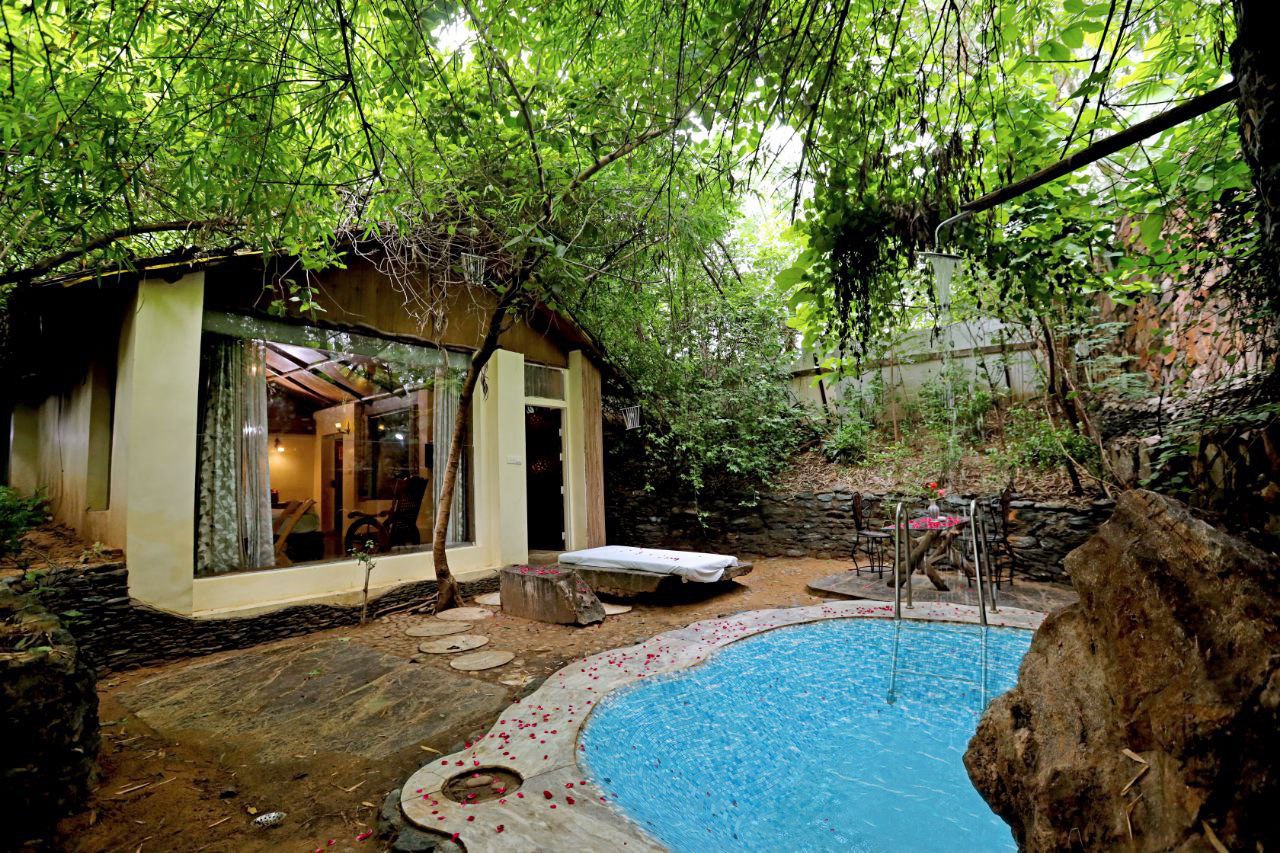
Recognised as a Luxury Resort in Jaipur, Lohagarh Fort Resort offers a large green campus with varied accommodation experiences. Depending on the selected category, guests can consider cottages, luxury tents, suites, tree houses and private-pool stays.
The resort experience is not limited to accommodation. Families and couples can spend time enjoying indoor and outdoor activities, nature-oriented surroundings, dining and wellness experiences. This makes it possible to balance active sightseeing with rest rather than travelling continuously throughout the day.
Guests can plan separate outings for Amer and Man Sagar, central Jaipur and more distant landscapes such as Sambhar. Travel time will depend on traffic, road conditions and the specific lake, so routes should be checked individually instead of assuming that every destination is only a few kilometres away.
Lohagarh Fort Resort is especially relevant for travellers who want their Jaipur holiday to include both sightseeing and time within a spacious resort environment.
A Practical Lake Itinerary for Jaipur
Visitors with limited time can combine Man Sagar Lake with Amer Palace and Maota Lake because these attractions fit naturally into the same side of Jaipur. Jal Mahal can be planned as a short viewing and photography stop, while Amer requires more time for exploration.
Travellers interested in quieter landscapes can consider Sagar Lake after confirming access conditions. Chandlai should be planned separately, preferably in the morning for birdwatching. Sambhar requires a longer dedicated excursion and should not be added casually to an already crowded city schedule.
A balanced plan could include:
- Day one: Man Sagar Lake, Jal Mahal, Amer Palace and Maota Lake.
- Day two: Central Jaipur sightseeing and time to relax at the resort.
- Day three: Chandlai for birdwatching or Sambhar for a longer landscape excursion.
Actual routes should be planned according to the season, current conditions and the interests of the travelling group.
Conclusion
Jaipur’s lakes reveal an important side of the destination that is often overshadowed by its forts and palaces. Man Sagar Lake creates the iconic setting for Jal Mahal, Maota strengthens the visual grandeur of Amer, and Sagar offers a quieter seasonal landscape. Chandlai introduces visitors to the region’s wetland ecology, while Sambhar presents an extraordinary salt-lake environment beyond the city.
The most rewarding visit begins with realistic expectations. Not every site offers boating, developed picnic facilities or full water levels throughout the year. Some places are primarily viewpoints, while others are sensitive habitats or seasonal reservoirs.
By checking current conditions, respecting local restrictions and allowing enough time for each location, travellers can explore Jaipur’s water landscapes responsibly. Combined with a comfortable stay at Lohagarh Fort Resort, these lakes can add nature, history, photography and a refreshing change of scenery to a broader Jaipur holiday.