July 28, 2026
Jaipur has long been associated with royal celebrations, architectural grandeur, traditional hospitality and colourful cultural experiences. Its forts, palaces, heritage-inspired resorts and landscaped wedding properties make the city one of India’s most desirable destinations for couples planning a memorable wedding away from home.
However, once families begin exploring venues, they frequently face an important decision: should they choose a modern luxury resort or a heritage wedding property?
The answer is not simply a choice between contemporary comfort and traditional architecture. A successful destination wedding requires much more than an attractive background. Accommodation quality, venue flexibility, dining arrangements, accessibility, privacy, weather preparedness and event infrastructure can influence the complete guest experience.
A heritage venue may create a powerful sense of history and place, while a luxury resort may provide greater comfort and operational convenience. Some properties combine both experiences by placing modern hospitality facilities within heritage-inspired surroundings. Understanding these differences can help couples select a venue that supports their wedding vision without overlooking practical requirements.
What Defines a Luxury Destination Wedding in Jaipur?
A luxury wedding is often associated with expensive interiors, elaborate decorations and premium accommodation. However, genuine luxury is experienced through much more than visual presentation.
In a destination wedding, luxury can be seen when rooms are ready before guests arrive, luggage reaches the correct rooms, elderly relatives receive suitable accommodation and dietary requirements are managed without repeated follow-ups. It is also reflected in timely food service, organised venue transitions, attentive housekeeping, discreet security and the availability of trained staff when an unexpected requirement arises.
Luxury wedding properties generally provide modern rooms and suites, professionally managed event venues, climate-controlled indoor spaces, landscaped outdoor areas and reliable technical infrastructure. Some may also offer personalised assistance with guest arrivals, room allocation, transportation schedules and function coordination.
This type of venue is especially valuable for a multi-day celebration. When accommodation, dining, ceremonies and leisure facilities are available within one property, guests do not need to travel repeatedly between hotels and event locations.
Modern luxury properties may also provide greater flexibility for contemporary décor, large entertainment stages, advanced lighting, sound production and customised seating layouts. These capabilities are important for couples planning highly produced, glamorous or theme-led wedding functions.
What Creates a Heritage Wedding Experience?
A heritage wedding is shaped by architecture, culture, tradition and a strong sense of place. Courtyards, domes, arches, carved stonework, traditional façades and regional design details can create a naturally royal atmosphere.
Unlike a conventional event space that may require extensive decoration, a heritage setting already contributes to the wedding’s visual identity. Flowers, textiles, lamps and architectural lighting can enhance the surroundings instead of completely transforming them. This often gives photographs a timeless quality that feels closely connected to Jaipur and Rajasthan.
Cultural experiences can strengthen this connection. Traditional welcome ceremonies, folk performances, regional cuisine, local music and royal-style processions can make the wedding feel like an immersive celebration rather than a series of formal events.
Nevertheless, attractive architecture alone does not guarantee a successful heritage wedding. Couples must also assess room comfort, bathrooms, climate control, power backup, catering infrastructure, accessibility and guest movement. A property may look royal in photographs but create operational difficulties if it cannot comfortably support the wedding’s size and schedule.
Authentic Heritage Property vs Heritage-Inspired Resort
Not every property described as heritage offers the same kind of experience. Couples should understand the distinction between an authentic heritage property and a heritage-inspired resort.
An authentic heritage property may be a restored palace, fort, haveli or historic residence. Its original architecture, ageing materials, traditional courtyards and historical connection give it cultural depth that cannot be artificially recreated. Such a setting can make a wedding feel intimate, distinctive and closely connected to Rajasthan’s royal past.
However, historic properties were not originally designed for modern destination weddings. Some may have limited rooms, narrow passages, uneven floors, restricted vehicle access or smaller service areas. Conservation requirements may limit heavy installations, drilling, loud music, open flames or significant structural modifications.
A heritage-inspired resort is a modern hospitality property designed using traditional architectural influences. It may feature courtyards, arches, domes, stonework, royal interiors and regional landscaping while also providing contemporary rooms, wider guest routes, purpose-built venues and modern event infrastructure.
Neither option is automatically superior. An authentic property offers historical significance, whereas a heritage-inspired resort may provide greater operational flexibility. Couples should decide how much importance they place on architectural authenticity compared with room capacity, accessibility and wedding-production requirements.
Luxury vs Heritage Wedding Venues: The Main Differences
| Wedding factor | Luxury experience | Heritage experience |
|---|---|---|
| Primary appeal | Premium comfort and personalised service | Royal atmosphere and cultural character |
| Architecture | Contemporary or resort-oriented | Historic or traditionally inspired |
| Accommodation | Modern rooms, suites and villas | Character-led rooms with traditional styling |
| Event flexibility | Usually supports customised layouts | May depend on the existing architecture |
| Décor | Greater freedom for transformation | Existing surroundings become part of the décor |
| Guest convenience | Generally planned around modern needs | Must be assessed for each property |
| Photography | Polished and contemporary settings | Royal and culturally distinctive backgrounds |
| Event infrastructure | Often integrated into the property | May require additional arrangements |
| Accessibility | Usually easier for varied guest groups | Can be challenging in original historic buildings |
| Best suited for | Comfort-focused and production-heavy weddings | Tradition-focused and atmosphere-led weddings |
These differences are useful for comparing properties, but they are not absolute. A luxury resort may have traditional architecture, while a historic property may have been thoughtfully upgraded with contemporary facilities.
The Emotional Difference Between Luxury and Heritage Weddings
Luxury and heritage settings can create different emotional experiences.
A luxury wedding often feels polished, glamorous and highly personalised. It may include sophisticated décor, dramatic entrances, premium entertainment, carefully curated dining and controlled visual presentation. The venue acts as a flexible canvas that can be transformed according to the couple’s chosen theme.
A heritage wedding generally creates a stronger sense of place. Its architecture and cultural details connect the celebration with Jaipur’s identity. The setting may evoke royal customs, family traditions and ceremonial depth. Instead of changing the venue completely, wedding design usually works with its original or traditionally inspired character.
Neither emotional experience is better than the other. Couples who imagine a contemporary, fashion-led celebration may prefer a luxury setting. Those who value cultural storytelling, timeless surroundings and traditional ceremonies may lean towards heritage.
Families that want both should look for a venue where modern services operate comfortably behind a heritage-inspired atmosphere.
Which Experience Matches Your Wedding Vision?
Couples should begin by defining how they want their wedding to look and feel. They should also consider how they want guests to experience the destination.
A contemporary luxury celebration may involve dramatic stages, international entertainment, large floral installations and modern interiors. A heritage celebration may focus on traditional ceremonies, regional music, royal processions and architecture-led decoration.
The guest profile must also influence the decision. Weddings attended by elderly relatives, young children and guests travelling from different cities require comfortable rooms, safe pathways and convenient movement. A visually striking property may become tiring if guests must climb difficult staircases or travel between distant venues.
Wedding size is equally important. A heritage courtyard may be perfect for an intimate ceremony but unsuitable for a very large guest list or elaborate production. A large resort lawn can accommodate more people and infrastructure, although it may require careful design to create warmth and character.
The right venue must support the emotional vision of the couple while remaining practical for the people attending the celebration.
Accommodation and Guest Comfort
Accommodation is one of the most important parts of a destination wedding because guests experience the property for much longer than the main ceremony. Their impression is shaped by room readiness, housekeeping, meals, luggage management, venue accessibility and the assistance they receive throughout their stay.
Families should confirm how many guests can be accommodated within the property and whether the available room categories suit couples, families with children and elderly relatives. They should also examine extra-bed arrangements, bathroom facilities, climate control, lift access and the distance between rooms and event venues.
Heritage-style rooms can be visually memorable, but they should still provide comfortable beds, modern bathrooms and dependable guest services. Luxury rooms may offer more advanced facilities, but the overall property should retain enough character to make the wedding feel connected to Jaipur.
Keeping accommodation and wedding functions within the same campus can simplify the complete celebration. It reduces transportation delays, helps events begin on time and allows family members to remain connected throughout the wedding.
Event Spaces for a Multi-Day Wedding
A destination wedding usually includes a welcome gathering, mehendi, haldi, sangeet, wedding ceremony, reception and farewell breakfast. Hosting every function in the same space may make the celebration repetitive.
A suitable property should provide several venues that can be adapted to different guest counts, moods and production requirements. A garden can support a relaxed daytime mehendi, while an indoor venue may be more appropriate for a professionally produced sangeet. A courtyard can create intimacy for family rituals, and a large lawn can accommodate the main wedding ceremony.
Families should inspect each venue as an operational space, not merely as a photography background. Entry routes, catering access, electrical capacity, stage positioning, service movement and washroom proximity all affect the success of an event.
It is also important to ask whether the property will guarantee access to the selected venues. If another celebration is scheduled at the same time, the preferred space, preparation areas or guest routes may become unavailable.
Weather Preparedness and Indoor Backup
Jaipur’s weather can affect wedding planning during every season. Winter evenings may become unexpectedly cold, summer afternoons can be uncomfortable, and monsoon rain can interrupt outdoor events.
A genuine indoor backup venue is therefore essential. The alternative space should accommodate the complete guest list and support the required dining, décor and entertainment arrangements. A small meeting room cannot serve as a realistic backup for a large outdoor celebration.
Couples should ask how quickly the property can move seating, sound equipment and essential décor if weather conditions change. They should also establish who will make the final decision and how many hours vendors will need to relocate the setup.
Properties with indoor and outdoor venues within the same campus are generally better equipped to make this transition without creating serious delays.
Décor, Production and Creative Flexibility
Luxury wedding venues generally provide greater flexibility for large stages, suspended installations, professional lighting and custom layouts. This can be useful when the couple’s vision depends on transforming every function into a completely different environment.
Heritage properties work differently. Their façades, courtyards and architectural details already influence the décor. Designers may need only flowers, textiles, lamps and focused lighting to create a strong atmosphere.
However, original heritage properties may restrict drilling, hanging installations, open flames, fireworks, sound levels or the movement of heavy production equipment. These restrictions can influence creative plans and increase logistical complexity.
A heritage-inspired luxury resort may offer greater freedom because its traditional architecture is supported by spaces designed for contemporary events.
Food and Hospitality Across Multiple Functions
Food is central to an Indian wedding, but destination-wedding dining involves more than selecting the main dinner menu. The property may need to serve welcome refreshments, breakfasts, lunches, evening snacks, function dinners and late-night food over several days.
Families should evaluate the kitchen’s ability to manage multiple cuisines, regional dishes, live counters and special dietary requirements. Children, elderly guests and people with religious or medical restrictions may need customised meal options.
The quality of service is equally important. Food must reach every venue at the appropriate time and temperature, while guests resting in their rooms may occasionally require separate meals.
A strong hospitality team manages these requirements without repeatedly involving the family. That operational consistency is one of the most meaningful forms of luxury during a destination wedding.
Cultural Authenticity Beyond Architecture
Decorative arches and traditional paintings do not automatically create an authentic heritage experience. Cultural character should extend beyond the appearance of the building.
Couples should examine how the property represents Rajasthan through hospitality, cuisine, art, design, materials, music and guest experiences. Traditional welcome ceremonies, thoughtfully presented regional dishes and genuine folk performances can deepen the wedding’s connection with Jaipur.
These elements should feel natural to the venue rather than being added merely as decorative entertainment. The best heritage experiences remind guests where they are and help them understand the cultural identity of the destination.
Privacy, Safety and Exclusivity
A destination wedding feels more personal when guests can use the property without frequent interaction with unrelated visitors. Couples should ask whether another wedding, corporate event or large group will be hosted during the same dates.
Shared restaurants, entrances, reception areas and common facilities can reduce privacy. Simultaneous events may also place additional pressure on parking, service teams, kitchens and technical infrastructure.
Security arrangements should include controlled access, guest identification, appropriate lighting and safe routes for children and elderly guests. Families should clearly understand which parts of the property will be exclusively available and which areas will remain shared.
Luxury branding does not automatically guarantee privacy, and heritage character does not automatically provide exclusivity. These conditions must be confirmed before booking.
Where Luxury Wedding Venues May Fall Short
Luxury venues offer many advantages, but their possible limitations should also be considered.
Some modern properties can look similar to luxury hotels found in other cities. If the architecture, hospitality and activities have little connection with Rajasthan, the wedding may not feel distinctly rooted in Jaipur. Additional décor and entertainment may then be required to create a recognisable sense of destination.
Large luxury properties may also organise multiple weddings or commercial events at the same time. Even when individual venues are separate, shared entrances and public areas can affect the private atmosphere.
Couples should therefore evaluate whether the property offers local identity, privacy and character in addition to premium facilities.
Where Heritage Wedding Venues May Fall Short
Heritage properties can provide extraordinary visual atmosphere, but their operational limitations require careful examination.
Original layouts may restrict large stages, sound systems, lighting equipment and guest movement. Uneven surfaces, distant rooms, limited lifts and narrow access points can cause difficulties for elderly relatives and guests with mobility requirements.
A smaller room inventory may require families to use additional hotels. This introduces transportation schedules, luggage coordination, delayed arrivals and increased dependency on vehicles.
Some properties also impose strict controls on sound, décor, fireworks and event timings. These restrictions are not necessarily disadvantages, but they must be understood before contracts are finalised.
Photography: Contemporary Elegance vs Royal Storytelling
Photography is an important part of venue selection because each wedding event requires a distinct visual environment.
Luxury resorts may offer polished interiors, modern architecture, landscaped lawns and carefully designed lighting. These settings work well for contemporary portraits, fashion-led imagery and sophisticated evening events.
Heritage surroundings offer arches, traditional façades, courtyards and textured architectural details. Such elements create a stronger connection with Rajasthan and support royal or culturally influenced wedding photography.
Couples should examine the variety of backgrounds available across the property. A beautiful entrance alone is not enough for a multi-day wedding. The venue should provide different settings for bridal portraits, family photographs, couple sessions and individual events without making every album look repetitive.
Understanding the Complete Wedding Cost
Venue decisions should never be based only on room rates or rental charges. The actual cost includes accommodation, food, décor, technical production, transportation, furniture, vendor access, power requirements, permissions and weather-contingency arrangements.
A heritage property may reduce décor costs because the architecture already provides a strong visual setting. However, families may need additional spending for transportation, temporary facilities, climate control or technical infrastructure.
A luxury resort may have a higher initial price but include facilities that reduce dependence on outside suppliers. Its event spaces may also require more decoration if the couple wants to create a distinctly royal Jaipur atmosphere.
Families should request detailed quotations and compare all inclusions, exclusions and mandatory vendor conditions before evaluating the financial difference.
Luxury vs Heritage: Which Is Right for Different Couples?
| Your main priority | More suitable option | Why |
|---|---|---|
| Modern comfort and personalised service | Luxury venue | Greater focus on premium accommodation and hospitality |
| Historical authenticity | Original heritage property | Offers genuine architectural and cultural significance |
| Elaborate technical production | Luxury venue | Usually provides more flexibility for equipment and installations |
| Royal photography | Heritage venue | Traditional architecture creates distinctive backgrounds |
| Elderly-friendly accessibility | Luxury or upgraded heritage resort | Modern layouts generally support easier movement |
| Large room inventory | Full-service resort | Allows more guests to stay within one property |
| Minimal decorative transformation | Heritage venue | Existing architecture already supports the atmosphere |
| Several differently styled functions | Large resort | Multiple spaces provide greater event flexibility |
| Complete exclusivity | Private resort or heritage property | Depends on the property’s booking and event policies |
| Heritage ambience with modern comfort | Heritage-inspired luxury resort | Balances regional character and operational convenience |
A Practical Venue Decision Scorecard
Couples can score every shortlisted property from one to five against the following factors:
| Evaluation factor | What to examine |
|---|---|
| Wedding atmosphere | Does the property match the couple’s visual and emotional vision? |
| Heritage character | Is it authentic, heritage-inspired or mainly decorative? |
| Accommodation | Can the required guests stay comfortably on the property? |
| Hospitality | Can the team manage a complex multi-day wedding? |
| Venue variety | Are suitable spaces available for every function? |
| Accessibility | Can children and elderly guests move safely? |
| Privacy | Will other weddings or events take place simultaneously? |
| Weather readiness | Is there a realistic indoor alternative? |
| Production flexibility | Can the venue support the intended décor and entertainment? |
| Complete cost | What extra infrastructure, transport and services will be needed? |
The final score can help families compare properties objectively. However, they should also establish three non-negotiable requirements. A venue that scores well overall may still be unsuitable if it fails on accommodation capacity, privacy or weather readiness.
Can One Venue Offer Both Heritage and Luxury?
Luxury and heritage do not have to be opposing choices. Many couples want Jaipur’s royal visual character without compromising modern accommodation, guest comfort, venue flexibility or event infrastructure.
A thoughtfully designed property can use traditional architecture, cultural details and regional experiences to establish a heritage atmosphere while providing modern rooms, professional service and purpose-built event spaces behind the scenes.
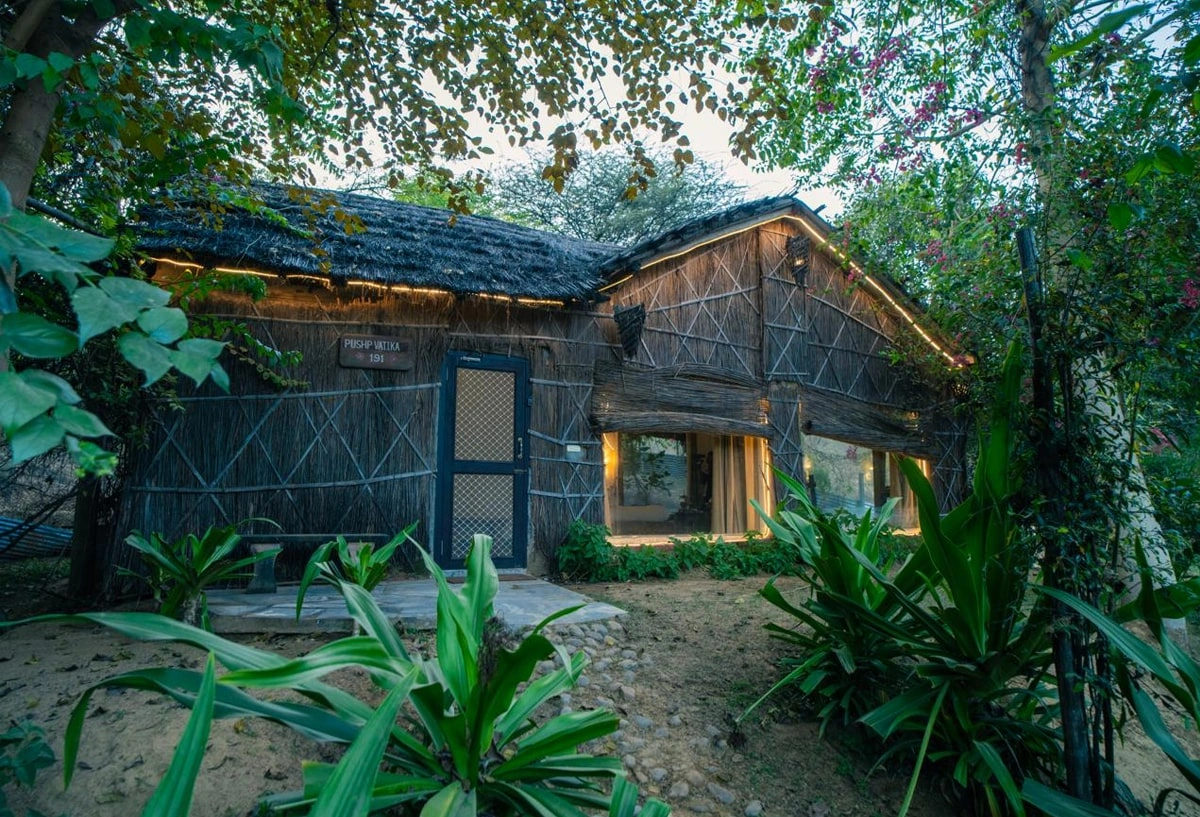
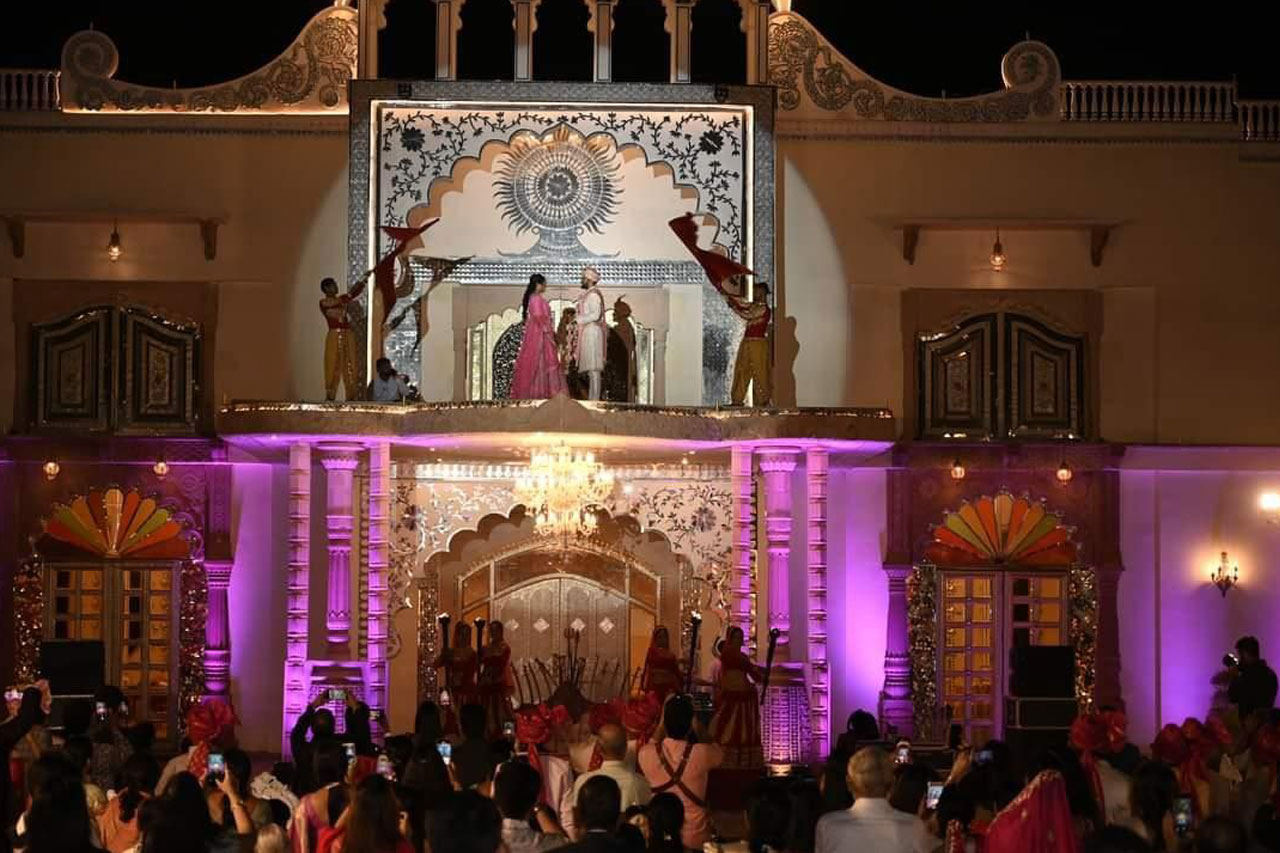
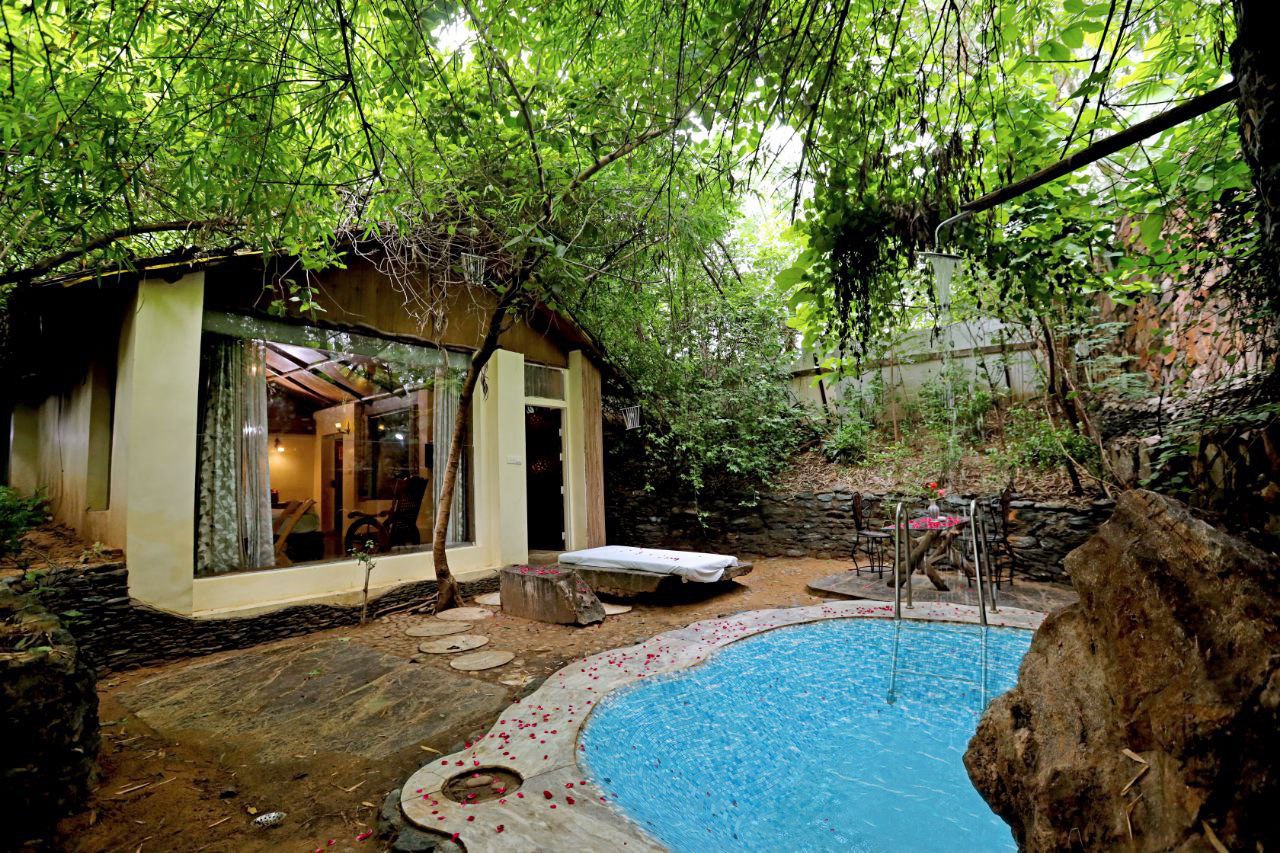
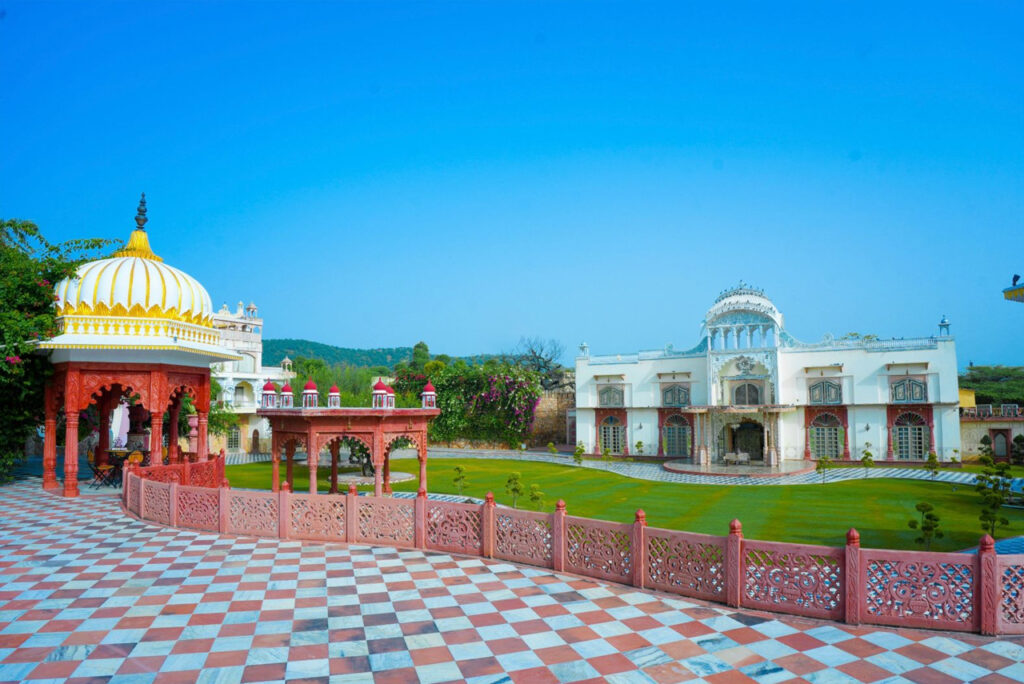
Lohagarh Fort Resort represents this combined approach. Its heritage-inspired architecture and green surroundings create a strong connection with Rajasthan, while its very large resort campus provides space for multi-day wedding celebrations. The property offers many luxurious rooms, suites and villas, helping families accommodate their guests within the same campus.
Multiple celebration spaces allow different functions to be planned according to their guest count, mood and production requirements. Indoor and outdoor venue possibilities also provide greater flexibility when weather conditions change.
Between ceremonies, guests can enjoy landscaped surroundings and several resort activities instead of remaining limited to their rooms. Keeping accommodation, recreation and wedding functions within one property can reduce transportation pressure and give families more time together.
This integrated experience can be particularly valuable for couples searching for a destination wedding resort in Jaipur where royal ambience is supported by modern hospitality and wedding infrastructure.
Questions to Ask Before Booking
Before confirming a luxury or heritage wedding venue, families should ask:
 How many guests can be accommodated within the property?
- Are the rooms comfortable for elderly guests and families with children?
- How many indoor and outdoor event venues are available?
- Is there an indoor backup large enough for the complete guest list?
- Will another wedding or commercial event take place simultaneously?
- Are there restrictions on décor, fireworks, sound or outside vendors?
- How far are the rooms from the wedding venues?
- Does the property provide reliable power and technical support?
- Which services and facilities are included in the quotation?
- How will luggage, room allocation and guest arrivals be handled?
- Are the pathways safe and accessible after dark?
- Who will coordinate guest requirements during the wedding?
Final Verdict: Luxury, Heritage or Both?
Couples should choose a luxury wedding venue when modern comfort, contemporary styling, complex production and personalised services are their leading priorities. This experience is particularly suitable for large celebrations requiring several professionally managed events and flexible infrastructure.
An authentic heritage property is more appropriate when historical character, architecture and cultural atmosphere are central to the wedding vision. It works best when the guest list and production plan comfortably fit within the property’s natural limitations.
A heritage-inspired luxury resort offers a third option. It can provide Jaipur’s royal visual character while supporting the celebration with contemporary rooms, multiple venues, modern facilities and professional hospitality.
The comparison is therefore not simply about choosing new architecture or old architecture. Luxury delivers its greatest value through service, comfort, convenience and operational reliability. Heritage delivers its greatest value through cultural identity, architectural character and emotional connection with the destination.
A successful heritage destination wedding in Jaipur must still provide modern comfort and organised hospitality. Similarly, an effective luxury wedding venue in Jaipur should offer enough local identity to make the celebration feel connected to the city.
The right property is not necessarily the most expensive resort or the oldest palace. It is the venue that expresses the couple’s wedding story while comfortably supporting accommodation, dining, ceremonies, entertainment, safety and guest movement. For many families, the ideal choice is a place where Rajasthan’s heritage establishes the atmosphere and modern luxury quietly ensures that everything works beautifully.