July 24, 2026

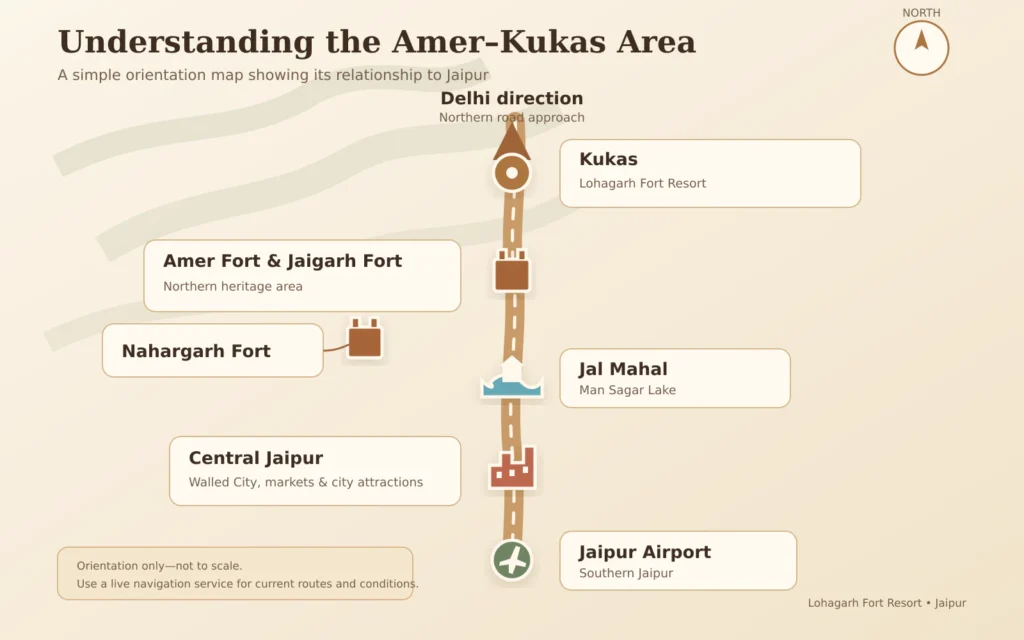
Jaipur is often introduced through the image of its historic centre: rose-toned façades, palace complexes, traditional bazaars and monuments enclosed within the old city. That image is important, but it represents only one part of Jaipur’s wider travel geography. The visitor experience also extends north towards Jal Mahal, Amer, Jaigarh, Nahargarh and Kukas, where the dense urban landscape gradually gives way to hill formations, open surroundings and larger hospitality properties.
The term “Amer–Kukas resort corridor” is best understood as a practical travel description rather than an officially designated tourism district. It refers to the broad northern approach to Jaipur where access to historic attractions, road connectivity and the availability of space have encouraged the development of hotels, resorts, event properties and leisure destinations. Understanding this geography can help travellers decide whether the area suits their sightseeing plans, preferred pace and overall purpose of travel.
Jaipur itself is one of the three principal points of India’s Golden Triangle, alongside Delhi and Agra. The city was established in 1727 by Sawai Jai Singh II and is recognised for its planned urban form, forts, palaces, astronomical heritage and craft traditions. Official tourism information presents Amer Fort, Jaigarh Fort, Nahargarh Fort, Jal Mahal, Jantar Mantar and the historic city as important parts of the wider Jaipur experience. Incredible India’s official Jaipur guide
Jaipur Is a Destination with Several Distinct Stay Zones
“Staying in Jaipur” does not describe one uniform experience. A hotel near the Walled City, a business property in a central neighbourhood, an airport-side hotel and a resort near Kukas may all use Jaipur in their address or destination description, but they serve travellers in different ways.
The historic centre is valuable for travellers who want immediate access to bazaars, architectural landmarks and the energy of the old city. Central neighbourhoods may offer easier access to offices, restaurants and different parts of urban Jaipur. Airport-side accommodation can be practical for short stays or early departures. The Amer–Kukas side, by contrast, is often considered by travellers who want to combine northern Jaipur sightseeing with a more spacious resort experience.
None of these locations is automatically superior. The right choice depends on where guests plan to spend their time, how they intend to travel, whether they are visiting with children or elderly relatives, and whether the accommodation itself is meant to be part of the holiday.
Why Amer Is Central to Understanding the Area
Amer is not simply another sightseeing stop outside Jaipur. It is historically connected with the development of the city itself. Before Sawai Jai Singh II established Jaipur in 1727, Amer was the seat of the Kachhwaha rulers. Its fort complex remains one of the region’s defining landmarks, while nearby Jaigarh and Nahargarh contribute to the northern landscape of fortified hills and elevated views.
Jal Mahal and Man Sagar Lake form another important point on the route between central Jaipur and the Amer side. Together, these attractions create a recognisable sightseeing zone that is geographically different from the Walled City but closely connected with Jaipur’s cultural identity.
The continued importance of this area is also reflected in public tourism investment. A Government of India tourism document published in February 2025 recorded sanctioned projects for the development of the Amber–Nahargarh area and Jal Mahal. This does not make Kukas an officially declared resort district, but it does demonstrate the continuing tourism importance of Jaipur’s northern heritage landscape.
Where Kukas Fits into Jaipur Travel Planning
Kukas lies beyond the Amer side on the northern approach to Jaipur. It should not be described as central Jaipur, and travellers should not select it under the assumption that every city attraction or shopping market will be immediately outside the resort.
Its value lies in a different kind of convenience. Guests arriving by road from the Delhi direction may find the northern approach practical, while travellers concentrating on Amer-side heritage attractions can potentially organise those visits without first travelling deep into central Jaipur. The area also accommodates properties with larger grounds, outdoor spaces and multiple on-site facilities—features that are harder to provide in Jaipur’s denser urban neighbourhoods.
For someone considering a resort near Jaipur, the decision should therefore begin with the purpose of the trip. Kukas may work well when the stay itself is expected to include relaxation, dining, activities, family time or a celebration. It may be less suitable for a visitor whose entire schedule is centred on repeated shopping trips and late-evening engagements in central neighbourhoods.
The Difference Between Sightseeing Convenience and Stay Quality
Accommodation decisions are often reduced to a question of distance: Which property is closest to the greatest number of attractions? That can be useful, but it is incomplete. A central location may reduce travel for certain places while offering limited space for activities, gardens or quiet family time. A resort farther from the centre may require more structured transport but provide a more complete experience between sightseeing periods.
This distinction matters particularly for families. Children may not enjoy continuous monument visits from morning until evening, while elderly guests may require slower mornings and rest periods. Parents may appreciate having dining, recreation and accommodation available in one place. In these cases, the hours spent away from the city’s attractions become part of the holiday rather than unused time.
A couple visiting Jaipur for a short cultural break may make a different decision from a multi-generational family staying for three nights. Similarly, guests attending a wedding or private celebration will judge the location according to accommodation, event movement and family convenience—not solely according to proximity to a market.
Who May Benefit from Staying in the Amer–Kukas Area?
The area can be particularly relevant for travellers arriving by road from northern India, families seeking a more spacious stay, groups attending destination celebrations and visitors who want to divide their time between sightseeing and resort experiences.
It may also suit travellers who prefer to begin with Amer-side attractions before entering central Jaipur. This can create a more geographically organised plan, although actual travel time will always depend on traffic, road conditions, departure time and the precise location of the property.
Families should still examine the individual resort rather than selecting it based only on the area. Important considerations include room configuration, dining availability, children’s activities, accessibility, walking distances within the property, transport assistance and the operating hours of facilities.
When Central Jaipur May Be the Better Choice
A credible location guide should also explain when Kukas may not be the most practical option. Travellers whose priorities are shopping in traditional markets, attending meetings across central Jaipur, exploring the Walled City repeatedly or returning late from city-based dining may prefer a central hotel.
Visitors staying for only one night may also prioritise transport efficiency over a broader resort experience. If the accommodation will be used primarily for sleeping between a tightly packed series of city appointments, paying for a large resort environment may provide limited value.
The important question is not whether Kukas or central Jaipur is universally better. It is whether the selected location matches the traveller’s actual programme.
A Practical Comparison of Jaipur Stay Locations
| Travel requirement | Central Jaipur stay | Amer–Kukas resort stay |
|---|---|---|
| Frequent access to city markets | Generally more convenient | Requires planned transportation |
| Amer-side sightseeing | Requires travel towards northern Jaipur | Can be more practical depending on the property |
| Large grounds and outdoor spaces | Usually limited | More commonly available |
| Short business visit | Often practical | Depends on meeting locations |
| Family relaxation | Depends on hotel facilities | Often an important part of the resort experience |
| Multi-day celebration | May involve multiple properties | Can be easier when stays and functions are integrated |
| Arrival from the Delhi direction | Requires travel further into Jaipur | May offer a practical northern approach |
| Resort activities | Limited in many city hotels | More likely to be available on site |
| Evening shopping in central Jaipur | Easier | Requires return transportation |
This comparison should be treated as a planning framework rather than a fixed rule. Individual properties vary considerably, and travellers should confirm current routes, facilities and travel requirements before booking.
Transport Planning Is Essential
Guests staying outside central Jaipur should arrange transportation deliberately. Relying on approximate online travel times can lead to unrealistic schedules because Jaipur traffic changes according to time of day, weekends, public holidays, wedding dates and activity around major attractions.
A better approach is to group sightseeing geographically. Amer Fort, Jaigarh Fort, Nahargarh and Jal Mahal belong to the broader northern heritage landscape, although they should not automatically be treated as one quick cluster. Each attraction requires its own visiting time, access planning and consideration of opening conditions.
City Palace, Jantar Mantar, Hawa Mahal and the traditional markets create another major sightseeing zone. Travellers may find it more comfortable to dedicate a focused period to that area rather than travelling repeatedly between the resort and the city throughout the day.
Guests should also confirm whether their accommodation provides transfer assistance, whether taxis are readily available for the return journey, and how much buffer time should be allowed before a railway or airport departure.
Season and Time of Day Can Change the Experience
Jaipur’s seasonal conditions should influence both accommodation selection and daily scheduling. The cooler months are generally more comfortable for extended outdoor sightseeing, while hotter periods require greater attention to shade, hydration, travel duration and rest.
During warmer months, early departures can make fort visits more comfortable, followed by a return to the resort during the hottest part of the day. Indoor dining, air-conditioned accommodation and carefully timed activities become particularly important. During the monsoon period, travellers should check current weather and road conditions rather than assuming every outdoor plan will operate normally.
Winter also requires planning. Jaipur days may be pleasant, but mornings and evenings can feel cool, especially in open or elevated areas. Families attending outdoor functions should prepare accordingly.
What Travellers Should Verify Before Booking
A resort’s photographs may communicate atmosphere, but they do not answer every practical question. Travellers considering the Amer–Kukas area should verify:
 The property’s exact map location
- Current access from their arrival direction
- Transportation options for Jaipur sightseeing
- Availability of meals throughout the stay
- Room types suitable for children or elderly guests
- Walking distances within the campus
- Activity schedules and seasonal availability
- Accessibility requirements
- Check-in and check-out timings
- Cancellation and payment conditions
- Whether a listed facility is included or chargeable
- Whether an event on the property may affect access to shared spaces
These questions are more useful than relying exclusively on labels such as luxury, premium or heritage.
Common Mistakes When Planning a Stay in the Amer–Kukas Area
Travellers sometimes choose accommodation based only on photographs or a general Jaipur address without considering how the location fits their daily plans. Common mistakes include assuming Kukas is within the historic city centre, scheduling repeated trips between the resort and central markets, relying on ideal online travel times, and failing to arrange return transportation after evening activities.
Another mistake is planning a full day of sightseeing without leaving time for meals, rest or the resort facilities included in the stay. Families should group attractions geographically, allow flexibility for traffic and confirm transport arrangements before departure. They should also verify activity schedules, dining timings and facility availability directly with the property rather than relying solely on older online listings.
The Role of Resort Design in the Kukas Experience
The value of a resort is shaped not only by room interiors but by how the complete property functions. Landscaping can influence shade, privacy and the visual experience. Thoughtful zoning can separate accommodation, activities, dining and celebrations. Clear movement routes can help children, elderly guests and larger family groups navigate the property comfortably.
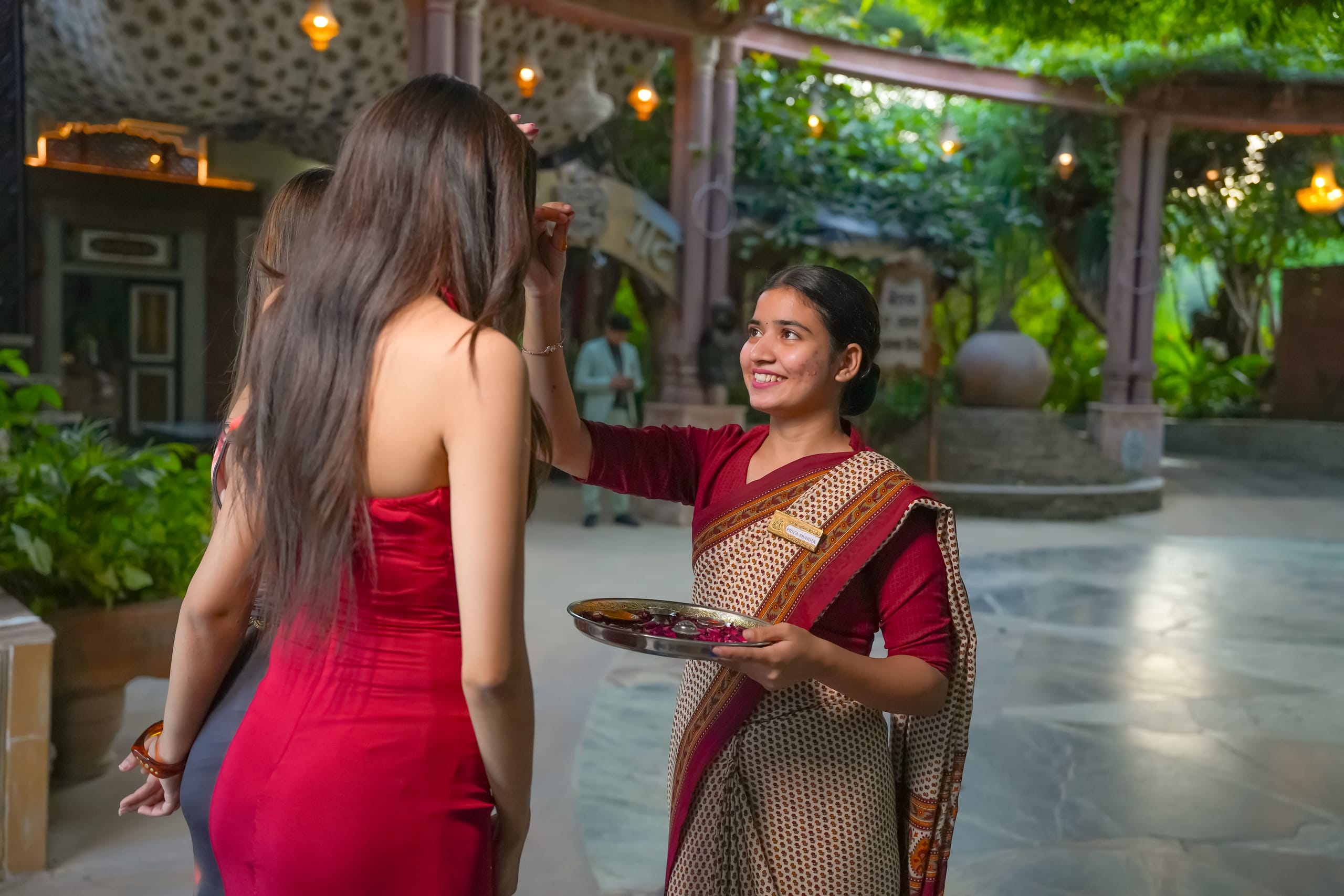
A resort should also be evaluated through service consistency: arrival handling, housekeeping, food quality, maintenance, staff communication and the accuracy of information provided before booking. Large grounds are beneficial only when they are maintained properly and supported by effective guest services.
Travellers comparing a modern resort with a heritage resort in Jaipur should also distinguish between an original historic building and a contemporary property inspired by regional architecture. Both can offer meaningful experiences, but the description should be accurate. Fort-inspired design, antique-style interiors and Rajasthani visual elements do not automatically make a building a protected historic property.
Lohagarh Fort Resort in the Amer–Kukas Landscape
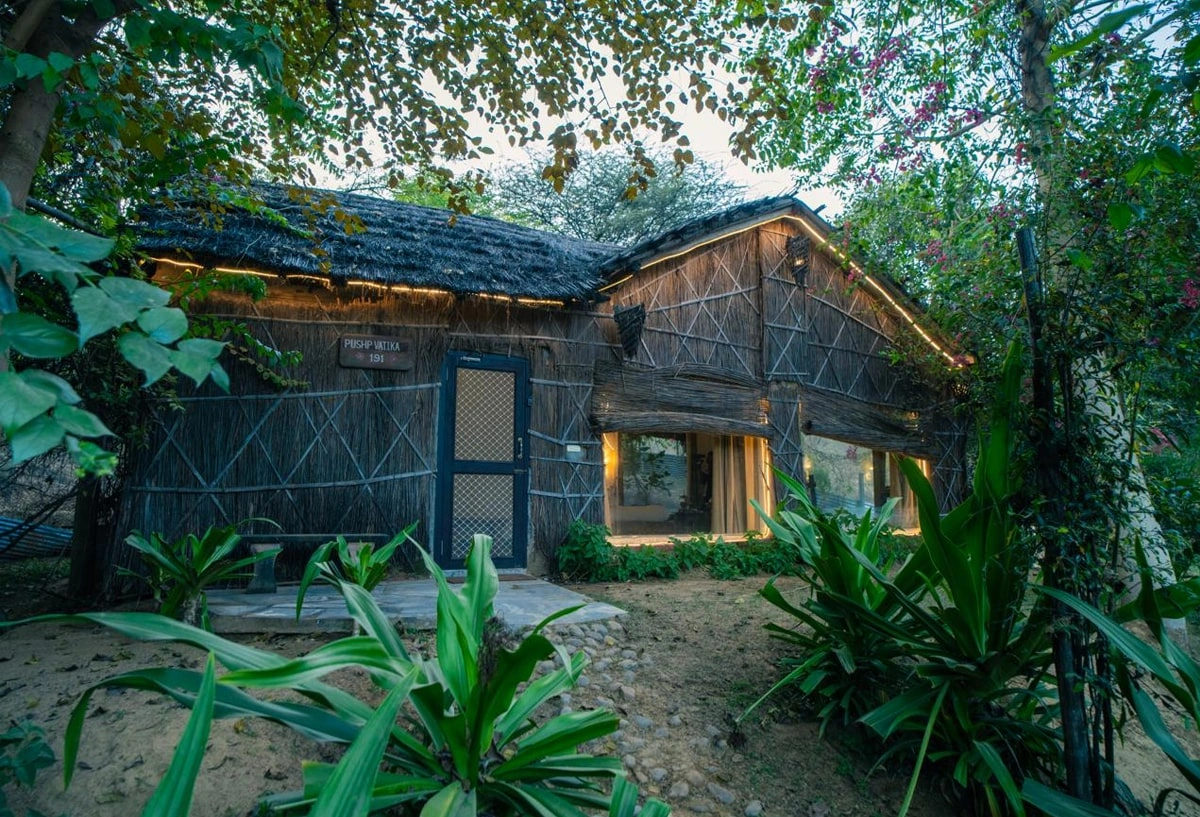
Lohagarh Fort Resort is positioned within the broader Kukas hospitality area and offers a stay shaped by fort-inspired architecture, natural surroundings and a very large resort campus. Its accommodation includes a diverse collection of rooms, suites, villas and family-oriented options, allowing different types of guests to stay within the same property.
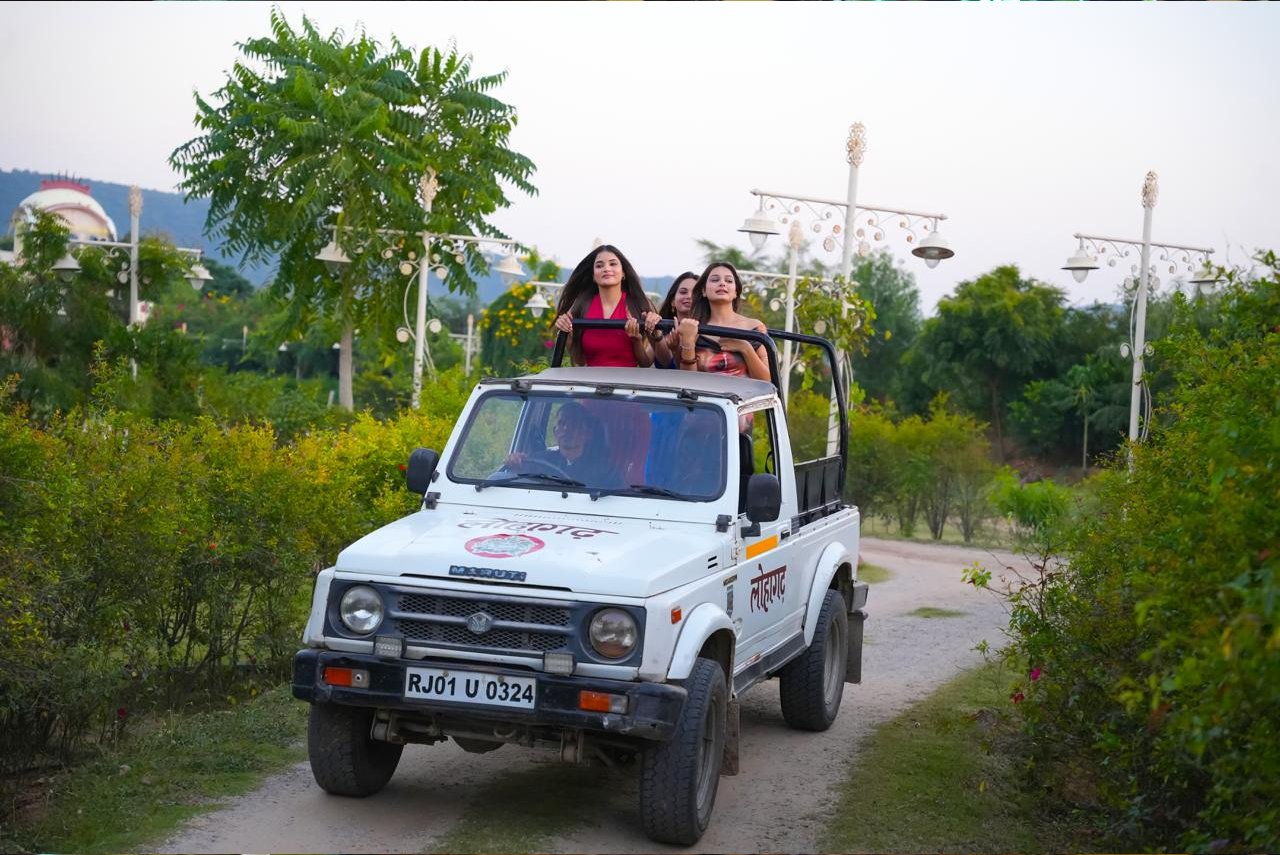
The resort experience extends beyond accommodation through dining, landscaped spaces, indoor and outdoor activities, wedding facilities and areas where families can spend time together between planned events or sightseeing. Its setting can suit travellers who want their Jaipur visit to include both cultural exploration and time within the resort.
Visitors considering Lohagarh should still plan according to their priorities. Those focused on central-city shopping should account for transportation, while guests arriving by road from the Delhi direction or concentrating on Amer-side attractions may find the location more naturally aligned with their route.
For travellers evaluating the Best Resort in Jaipur, the decision should be based on the complete fit between location, accommodation, guest requirements, activities, dining and the purpose of the visit—not on a single marketing claim.
A Decision Framework for Choosing the Area
The Amer–Kukas area may be suitable if:
- The stay itself is an important part of the holiday.
- Guests prefer larger grounds and outdoor surroundings.
- The group includes children or multiple generations.
- Amer-side attractions are part of the travel plan.
- The traveller is arriving by road from the Delhi direction.
- Accommodation and celebration facilities need to remain together.
- The family is comfortable planning transportation for central Jaipur.
A central Jaipur property may be more practical if:
- The visit is very short.
- Most activities are within the central city.
- Shopping and city dining are the main priorities.
- Guests expect to make several daily trips across urban Jaipur.
- The hotel is required mainly as a convenient place to sleep.
Conclusion
The Amer–Kukas area should not be presented as a replacement for Jaipur’s historic centre. It offers a different way to experience the destination—one that combines access to the northern heritage landscape with the space and facilities associated with resort hospitality.
For the right traveller, this can create a more balanced stay: sightseeing remains important, but it does not consume every hour of the holiday. Families can return to comfortable accommodation, spend time together, enjoy on-site experiences and approach Jaipur at a more sustainable pace.
The most informed choice comes from understanding the trade-off. Central Jaipur offers urban convenience; Amer and Kukas offer a different relationship with space, arrival routes and the northern side of the destination. When travellers select according to their genuine needs, location becomes part of a well-designed holiday rather than a compromise.