July 21, 2026
A destination wedding is often imagined through its most beautiful moments: the bride’s entrance, the energy of the baraat, a colourful haldi celebration, an emotional exchange of garlands and a reception filled with music. However, guests experience much more than the ceremonies themselves. They experience the arrival, check-in, room allocation, outfit changes, waiting periods, meals, movement between functions, late-night returns and departure the following morning.
When accommodation and wedding venues are located at separate properties, every one of these moments becomes dependent on transportation and precise coordination. A hotel described as being “only 15 minutes away” may appear convenient during the planning stage, but moving an entire wedding party is not the same as transporting a few individuals. Guests leave at different times, vehicles become separated, elderly relatives require assistance, children follow their own routines, and key family members are frequently delayed by last-minute responsibilities.
Keeping accommodation and wedding venues within the same resort does not automatically guarantee a successful celebration. The resort must still offer suitable room inventory, thoughtfully located venues, comfortable internal movement and dependable planning support. Nevertheless, when the right resort is selected, a single-campus wedding can remove several unnecessary complications while creating a more comfortable and connected experience for everyone.
A Nearby Hotel Is Not Always as Convenient as It Appears
Distance is often evaluated using the estimated driving time shown on a map. If the accommodation is ten minutes from the wedding venue, families may assume that moving guests will be easy. The real journey, however, begins long before the vehicle starts moving.
Guests must finish getting ready, leave their rooms, gather in the hotel lobby, identify the correct vehicle, wait for other passengers and load any necessary belongings. After reaching the venue, they must enter the property, find the correct celebration space and reconnect with their families. A journey described as ten minutes can easily consume 30 to 45 minutes from the guest’s perspective.
Road conditions can introduce further uncertainty. Local traffic, road diversions, weather, parking congestion and the arrival of several vehicles at the same time can affect even a carefully prepared transport plan. These risks multiply when transfers are required for the mehendi, sangeet, haldi, wedding ceremony and reception.
Couples should therefore compare actual door-to-venue movement rather than road distance alone. When the rooms and celebration spaces are within the same resort, many of these external dependencies disappear.
Wedding Guests Do Not Move as One Group
One of the biggest planning mistakes is assuming that every guest will be ready at the announced departure time. A wedding group rarely behaves like an organised tour group. Different guests have different responsibilities, routines and levels of mobility.
Close family members may be assisting the bride or groom. Parents with young children may require additional time. Elderly guests may move slowly or need help. Someone may be waiting for an outfit to be ironed, another guest may be completing a work call, while a family member may realise that an important ceremonial item has been left in the room.
A transport plan built around a single departure time does not accommodate these realities. If a bus waits for every delayed guest, the function may start late. If it leaves on time, individual cars or backup vehicles must be arranged for those left behind.
When guests stay within the wedding resort, they have greater flexibility. They can leave their rooms when ready and join a function without waiting for a complete group to assemble. This does not eliminate the need for coordination, but it makes normal variations in guest behaviour easier to manage.
Protecting the Wedding Timeline
Wedding timelines are interconnected. A delay during one ceremony often affects everything that follows. If the haldi starts late, lunch may be delayed. If guests take longer to return and prepare for the sangeet, performances may begin later than planned. The next morning, exhausted guests may struggle to be ready for an early ceremony.
Transportation between separate properties adds a recurring source of uncertainty to this already sensitive schedule. More importantly, some ceremonies cannot begin simply because most guests have arrived. The people needed for specific rituals, introductions, photographs or performances must also be present.
A key relative reaching late can hold up a family ceremony. A missing performer can interrupt the sangeet sequence. If the groom’s accessories or an important ritual object remain at the hotel, someone must travel back to retrieve them.
Locating accommodation and venues on the same resort campus provides the family and planning team with greater control. A delayed guest may still reach the venue quickly, and a forgotten item can usually be collected without disrupting the entire schedule.
Giving Guests the Freedom to Prepare at Their Own Pace
Destination weddings frequently involve several dress changes. A guest may wear something light for a daytime haldi, change into formal clothing for an evening sangeet and prepare again for the main wedding ceremony. Makeup, hairstyling, outfit adjustments and jewellery arrangements can take considerable time.
When rooms are located elsewhere, guests must predict everything they may need for the next several hours. They may have to carry additional clothing, footwear, medicines, cosmetics, children’s belongings and personal valuables to the venue. Alternatively, they must return to the hotel and depend on another scheduled transfer.
On-site accommodation gives guests access to their rooms throughout the celebration. They can prepare at a comfortable pace, change clothing, collect personal belongings and join the next function when ready. It allows the celebration to adapt to people rather than forcing every person to adapt to transportation.
Rest Between Ceremonies Is Part of Good Hospitality
A multi-day destination wedding can be physically demanding. Guests may have travelled long distances before attending several consecutive functions. Even energetic guests can become tired after remaining dressed for long hours, socialising continuously and moving between ceremonies.
The need for rest is even greater for elderly relatives, pregnant guests, people managing health conditions and families travelling with children. Without access to nearby rooms, guests may have no private place to sit quietly, change footwear, take medication or recover before the next event.
Rooms within the same resort allow guests to participate according to their comfort. Someone can attend the haldi, rest for an hour and return refreshed for the evening celebration. An elderly family member can leave a loud function early without waiting for a vehicle. Parents can take a tired child back to the room while other family members continue enjoying the event.
This flexibility does not reduce participation. In many cases, it enables guests to remain part of the wedding for longer because they are not forced to choose between complete exhaustion and leaving the celebration altogether.
A More Comfortable Experience for Elderly Guests
Elderly guests often hold an important emotional place in wedding ceremonies, but their practical needs can be overlooked during venue selection. Repeatedly boarding buses, walking through parking areas, waiting for vehicles and travelling late at night may be uncomfortable or unsafe for them.
Their experience is influenced not only by whether accommodation is available, but also by where their rooms are located in relation to the function areas. A resort may technically offer both accommodation and wedding venues while still requiring long or difficult movement between them.
During the site inspection, families should examine the actual route an elderly guest would follow. Are there steps, steep pathways or uneven surfaces? How far is the nearest washroom? Can assistance or internal transportation be arranged where necessary? Is there a suitable room location for guests who should not be exposed to excessive walking or late-night noise?
Choosing the right rooms for elderly relatives should form part of the room-allocation plan, rather than being handled after everyone arrives.
Making Weddings Easier for Families with Children
Children rarely follow a wedding itinerary. They may need meals before the planned dining time, become uncomfortable in formal clothing, grow tired during a long ceremony or fall asleep while the celebration is still underway.
When the family hotel is located elsewhere, parents may have limited options. They may leave the function completely, wait for arranged transportation or attempt to keep a tired child comfortable at the venue. If they return to the hotel, they may be unable to rejoin the celebration later.
Accommodation within the resort gives families more freedom. One parent or relative can take the child to the room while the rest of the family remains at the function. Parents can collect additional clothing, prepare food or allow the child to rest before returning for an important ceremony.
This is a seemingly small convenience that can significantly improve how families experience a long destination wedding.
Reducing Pressure on the Bride, Groom and Immediate Families
The bride and groom do not simply get dressed and arrive at the venue. Their preparation may involve makeup artists, hairstylists, photographers, wardrobe assistance, jewellery management, ceremonial accessories and coordination with multiple relatives.
If their preparation rooms are located at another property, the wedding becomes exposed to road delays at its most important moments. Outfits and jewellery must be transported securely. Photographers must divide their teams across different properties. Coordinators must communicate with people who are not physically present at the venue.
A forgotten item can become a serious delay. Something as small as a missing accessory, ceremonial cloth, document, pair of shoes or family heirloom can require an urgent return journey.
Preparation rooms within the same resort reduce this pressure. The bride, groom and their families remain close to the celebration spaces, while essential belongings stay accessible. Photographers, makeup artists and coordinators can move between rooms more efficiently without losing time travelling between properties.
Better Coordination for Makeup Artists and Support Teams
Wedding support teams work according to strict sequences. Makeup artists may begin with close family members before preparing the bride. Photographers may capture room preparations, move to the venue for décor photographs and return for portraits. Wardrobe assistants may need to reach several rooms in a limited period.
Separate accommodation divides this workflow between two operating locations. Delays become more likely because teams must account for traffic, parking, security entry and travel time every time they move.
A single resort campus creates a more concentrated working environment. Rooms, preparation areas and venues remain part of one event ecosystem. Teams still require schedules and clear responsibilities, but less of their time is consumed by external movement.
Why On-Site Accommodation Can Improve Baraat Coordination
The baraat is not just a procession; it is a carefully timed gathering involving the groom, relatives, friends, musicians and the receiving family. Before it begins, guests must be dressed, assemble at the correct location and receive any accessories or instructions planned by the family.
When the groom’s party is staying elsewhere, the first challenge is bringing everyone to the venue before the procession can even form. One delayed vehicle can contain key family members. Guests arriving independently may enter through the wrong gate or reach after the main procession has started.
On-site accommodation simplifies the assembly process. Guests can be guided from their rooms to the designated gathering point, while family coordinators can identify missing participants more easily. Safa arrangements, group photographs, music coordination and the groom’s preparation can take place within a more manageable environment.
Reducing Dependence on Wedding Transportation
Separate accommodation requires more than a few cars. Depending on the size of the wedding, families may need buses, drivers, pickup schedules, parking arrangements, luggage vehicles, guest coordinators and backup transportation.
Every ceremony may require two-way transfers. Vehicles must be available not only at the scheduled time but also for guests who leave early, arrive late, forget belongings or require medical assistance. Drivers must know both properties and remain reachable throughout the celebration.
Transportation is therefore not merely an expense. It is a complete operational system—and every additional system creates another opportunity for disruption.
When rooms and venues share one campus, transportation may still be needed for airport or railway-station transfers, but repeated movement between the accommodation and celebration location is substantially reduced.
Preventing Guests from Missing Important Moments
Wedding guests do not intentionally miss important ceremonies, but fragmented logistics can make it happen. Someone may misunderstand the shuttle time, return to the hotel to change, wait for a vehicle that has already departed or underestimate the time required to reach the venue.
This becomes particularly sensitive when the missing person is required for a ritual, family photograph, speech or performance. The event team may continue without them, or the schedule may be paused while someone tries to locate them.
On-site accommodation cannot ensure perfect punctuality, but it keeps guests much closer to the celebration. Coordinators can reach them more easily, and guests can join a function without waiting for external transportation.
Responding to Last-Minute Requirements
Weddings are filled with small but urgent requirements. A child needs different clothing. An elderly guest needs medication. A ceremonial item has been left in a suitcase. A family member needs another pair of shoes. A jewellery box must be collected before a ritual. A guest’s outfit requires an unexpected adjustment.
When accommodation is within the resort, these situations can often be handled in minutes. When the rooms are located elsewhere, the same requirement can trigger phone calls, vehicle arrangements and a return journey.
Operationally, this is one of the clearest advantages of a single-campus wedding: small problems are more likely to remain small.
Better Protection Against Weather-Related Disruption
Weather contingency planning generally focuses on the wedding function itself. Couples ask what will happen if rain affects an outdoor ceremony or if intense heat makes a daytime event uncomfortable. However, weather can also disrupt guest transportation.
Rain may delay vehicles, create congestion at entry points and make repeated boarding uncomfortable. Fog can affect visibility and travel time. Extreme heat can make waiting in hotel entrances, parking areas or outdoor pickup zones unpleasant, especially for children and elderly guests.
When accommodation and venues are located in the same resort, the planning team can focus on moving guests safely between internal spaces rather than transporting the entire wedding party across public roads. The resort must still provide appropriate backup planning, but one major layer of weather exposure is reduced.
Safer and More Comfortable Late-Night Celebrations
Sangeet functions, receptions and wedding ceremonies frequently continue late into the night. By the end of the function, guests may be tired, children may be asleep, and elderly relatives may already have exceeded their normal routines.
Waiting for a bus or locating a driver at that point can feel far more demanding than it appeared during planning. Guests may also leave before an important moment because they are worried about the return journey.
When their rooms are on the same campus, guests can return according to their individual comfort. Those who wish to stay can continue celebrating, while others can leave without arranging a separate journey. It provides both independence and peace of mind.
Creating a More Private and Connected Wedding Experience
A destination wedding is valuable partly because it brings relatives and friends together for more than a few formal hours. The conversations over breakfast, casual meetings outside rooms, last-minute rehearsals and laughter after the main function often become as memorable as the planned ceremonies.
If guests are divided among separate hotels, the group repeatedly fragments. They come together for a function and disperse when it ends. Their interaction becomes limited to the formal event schedule.
A shared resort encourages a more continuous experience. Guests encounter each other during meals, between functions and in leisure spaces. Both families have more opportunities to become familiar with one another, and the wedding begins to feel like a shared journey rather than a sequence of appointments.
Consistency Across the Complete Hospitality Experience
Guests form their impression of a wedding through every touchpoint, not just the decoration of the main venue. Arrival assistance, room cleanliness, meal timing, staff communication, wayfinding and departure arrangements all contribute to the experience.
When accommodation and celebrations are divided between different properties, service standards may vary. Guests may receive one set of instructions from the hotel and another from the venue. The hotel may have limited information about the function schedule, while the wedding venue may not be able to resolve room-related concerns.
A single-resort wedding creates the possibility of a more connected hospitality journey. This still depends on the resort’s organisation and the family’s planning, but the experience is less fragmented by separate management teams and locations.
Simplifying Luggage Handling and Room Allocation
Arrival day can be one of the most demanding phases of a destination wedding. Guests arrive at different times, often carrying several outfits and substantial luggage. Some rooms may be ready immediately, while others may require guests to wait.
If the function is taking place at another property, luggage and guests may need to follow different routes. Some people may travel directly to the venue, while their belongings remain at the hotel. Close family members may need ceremonial clothing or preparation materials before room allocation is complete.
When guests arrive at the same resort where the wedding is being held, luggage, accommodation and event coordination can be planned as one connected process. Guests can settle into their rooms and begin participating without another complete movement cycle.
The family should still discuss early arrivals, luggage storage, room readiness and welcome arrangements before confirming the property. Being in one location is most effective when the arrival plan is equally well organised.
Managing Early Arrivals and Late Departures
Wedding guests rarely arrive and depart together. Flight and train schedules create different arrival windows, while close relatives, performers and support teams may reach before the official check-in time.
Couples should ask how early arrivals will be handled. Is there a waiting area? Can luggage be stored safely? Will refreshments or breakfast be available? Which rooms must receive priority? Can preparation begin before every room is released?
Departure planning deserves similar attention. Some guests may leave immediately after breakfast, while others remain until the afternoon. Luggage collection, final meals and station or airport transfers should be coordinated without disturbing the final wedding activities.
A resort hosting both accommodation and celebrations can potentially manage these stages as part of one guest journey, but expectations must be agreed upon in advance.
Helping Photographers Capture Important Family Moments
Photography schedules often depend on gathering the correct people at the correct time. The photographer may be prepared for a family portrait, but one relative is still travelling from the hotel. The bride may be ready, while an important member of the immediate family has returned to collect something.
These delays reduce the time available for planned portraits and can force photographers to work during less favourable light or interrupt the ceremony schedule.
With accommodation on-site, family coordinators can locate guests more easily. Photographers can move from preparation rooms to venues without road travel, and the couple has greater flexibility to arrange portraits before or between ceremonies.
Understanding the True Cost of Separate Accommodation
A hotel with a lower room tariff can appear financially attractive, but room price alone does not reflect the complete cost of separating accommodation from the wedding venue.
The comparison should include:
 Buses and guest vehicles
- Driver charges and waiting time
- Fuel, tolls and parking expenses
- Transport coordinators
- Backup vehicles
- Luggage movement
- Refreshments during transfers
- Additional manpower at both locations
- Vehicles for late or early departures
- Repeated transfers for vendors and support teams
- Delays that extend vendor working hours
There is also an experiential cost that is harder to calculate. Guests lose time waiting and travelling. Elderly relatives become tired. Parents may leave functions earlier. Family coordinators spend more time solving transportation problems instead of participating in the celebration.
The right decision should therefore be based on the total operational cost and guest impact, not on room tariffs alone.
Clearer Responsibility and Better Coordination
When multiple properties and transport providers are involved, accountability becomes divided. The accommodation team may not know why vehicles are late. The transport company may be waiting for guests who have not left their rooms. The wedding venue may be ready but unable to begin because important family members have not arrived.
Each provider may be completing its individual responsibility, while the wedding as a whole still experiences delays.
Keeping rooms and venues within one resort creates clearer lines of coordination. It does not remove the need for a family representative or wedding planner, but fewer independent organisations must be aligned for every event.
Resort Size Is Important, but Layout Matters More
A resort may advertise a large campus, numerous rooms and several venues, but those features must work together practically. Couples should examine the relationship between accommodation blocks, dining areas, preparation rooms and function venues.
A large property can provide privacy and allow different ceremonies to have distinct identities. However, long or confusing internal routes may be difficult for some guests. The objective is not simply to find the largest resort; it is to find a resort whose layout can support the planned wedding comfortably.
During a site inspection, families should ask:
- How far are the guest rooms from every proposed wedding venue?
- Which rooms are most appropriate for elderly guests?
- Is internal transport assistance available where required?
- Are the walking routes comfortable and easy to understand?
- Can guests return to their rooms without passing through service areas?
- Are washrooms conveniently accessible from every function space?
- Where will the bride and groom prepare?
- Will noise from late-night functions affect guests who need to sleep?
- Can two consecutive functions be managed without creating guest congestion?
- Is there a practical route for vendor and equipment movement?
These questions reveal far more than a venue brochure or a collection of photographs.
Calculating the Right Number of Rooms
Couples often estimate room requirements by dividing the guest count by two. This is a useful starting point, but it is rarely an accurate final calculation.
Room planning should be based on actual families and their needs. A couple may share one room, while a family with children may require additional space or another bed. Elderly guests may need separate rooms or specific locations. The bride, groom and close relatives may require preparation rooms that should not be counted like ordinary guest accommodation.
The room plan may need to account for:
- Couples and individual guests
- Families travelling with children
- Elderly relatives
- Guests with mobility requirements
- Bridal and groom preparation rooms
- Rooms for key members of both families
- Makeup artists or personal support teams
- Performers, photographers or essential vendors
- Backup rooms for last-minute requirements
The objective should not be to place the maximum number of people into the minimum number of rooms. It should be to create a sensible accommodation plan that supports comfort and event operations.
Venue Capacity and Accommodation Capacity Must Be Evaluated Together
Some properties have a wedding lawn capable of hosting a large gathering but offer only limited accommodation. Others have enough rooms but do not provide celebration spaces suited to the desired guest count or event style.
Couples should evaluate the complete capacity relationship:
| Area of Evaluation | Practical Question |
|---|---|
| Wedding venue | Can the space comfortably host the expected number of guests? |
| Room inventory | How many wedding guests can realistically stay within the resort? |
| Dining arrangements | Can meals be served without crowding or excessive waiting? |
| Guest movement | Can people move between rooms and venues without bottlenecks? |
| Preparation areas | Are suitable spaces available for the bride, groom and close families? |
| Weather contingency | Is there a workable alternative if an outdoor plan changes? |
| Service movement | Can vendors and equipment operate without disturbing guests? |
A successful destination wedding requires these elements to function as one system. Selecting a venue only for its appearance may result in accommodation or movement problems later.
One Resort Does Not Automatically Mean One Well-Planned Wedding
It is important to recognise that on-site accommodation is an advantage, not a guarantee. A resort can offer rooms and wedding venues on the same campus while still being unsuitable for a particular celebration.
Families should verify room quality, inventory, internal distances, venue availability, service planning, accessibility and weather alternatives. They should also confirm whether the promised rooms and venues will remain reserved for their wedding according to the agreement.
The planning team should understand who is responsible for room allocation, luggage, guest queries, venue readiness, meal timing and communication between departments. Without clearly assigned responsibilities, even a single-location wedding can become disorganised.
The right question is therefore not merely, “Does this resort have rooms and wedding venues?” It is, “Can these rooms, venues and hospitality services work together for our particular wedding?”
When External Accommodation May Still Be Required
Keeping all guests on-site is desirable, but it may not be possible for every wedding. The resort may not have enough rooms, the guest list may be unusually large, or some attendees may require a different accommodation category.
In such cases, the family should prioritise on-site rooms strategically. The bride, groom, immediate families, elderly relatives, families with very young children and people required for important rituals should generally remain closest to the wedding venues.
External accommodation should be selected based on reliable travel time and ease of access, not room price alone. Dedicated vehicles, departure schedules and coordinators should be assigned to that guest group. Late-night returns and individual transport requirements must also be included in the plan.
A partially split arrangement can work, but it should be designed deliberately rather than becoming a last-minute response to insufficient room inventory.
Conduct a Real Movement Test During the Site Inspection
Couples should not evaluate a wedding resort entirely from a meeting room, brochure or vehicle tour. The most useful assessment is to experience the property as a guest would.
During the inspection, physically walk:
- From a proposed guest room to the breakfast area.
- From the accommodation area to the haldi or mehendi venue.
- From the proposed bridal preparation room to the main wedding venue.
- From each function space to the nearest guest washrooms.
- From the late-night celebration area back to the rooms.
- Along the route that elderly guests and families with children would use.
- Between the proposed venues for two consecutive functions.
- From the main arrival point to the room-allocation area.
Record the approximate time required for each route. Consider what the same journey would feel like in wedding attire, in different weather conditions and during a period of heavy guest movement.
This simple exercise can identify concerns that are invisible in photographs.
Essential Questions to Ask Before Booking
Before finalising a property, couples should obtain clear answers to the following questions:
- How many rooms can be reserved exclusively for the wedding group?
- Which room categories are included in the proposed package?
- What is the actual walking distance between rooms and each function venue?
- Which rooms are most suitable for elderly guests?
- Can internal transport assistance be arranged if needed?
- Where will the bride and groom prepare?
- How will luggage and room allocation be managed?
- What happens if guests arrive before rooms are ready?
- Is there a suitable waiting area for early arrivals?
- Can breakfast and meals be aligned with the wedding schedule?
- Are indoor or covered alternatives available for weather changes?
- Can venue changes be implemented without moving guests outside the resort?
- How will late-night guest movement be handled?
- Where will artists, photographers and essential vendors stay?
- Can key family rooms be assigned close to the main venues?
- How will guests receive schedule updates?
- Are celebration spaces appropriate for the expected guest count?
- Can consecutive events be hosted without causing congestion?
- Will other events take place at the resort during the same dates?
- Who will be responsible for coordinating rooms and wedding venues?
- What is the plan if some guests must stay at another property?
These questions move the discussion beyond décor and pricing. They help couples understand whether the property can support the complete guest journey.
Why Choose Lohagarh Fort Resort for Your Destination Wedding?
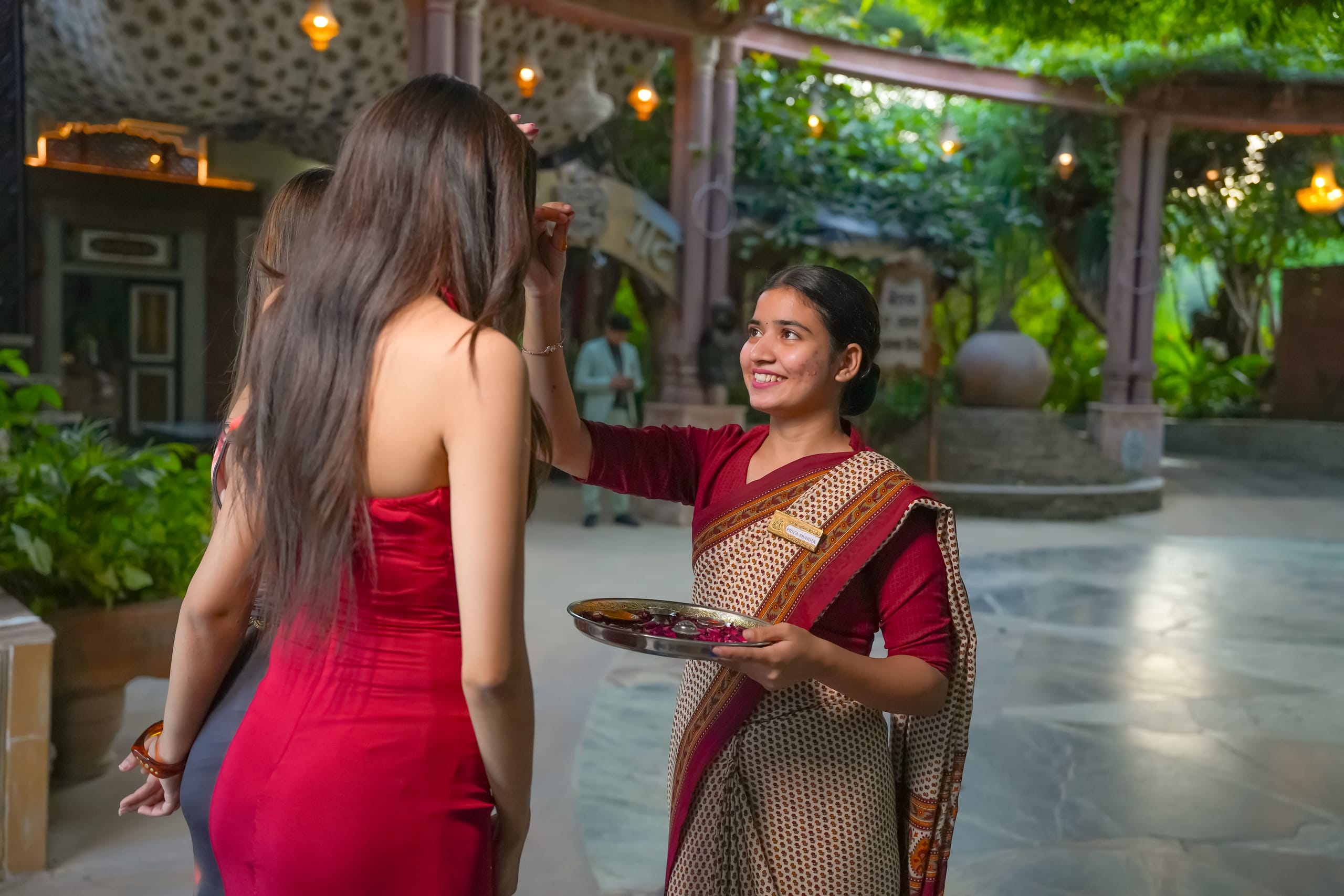
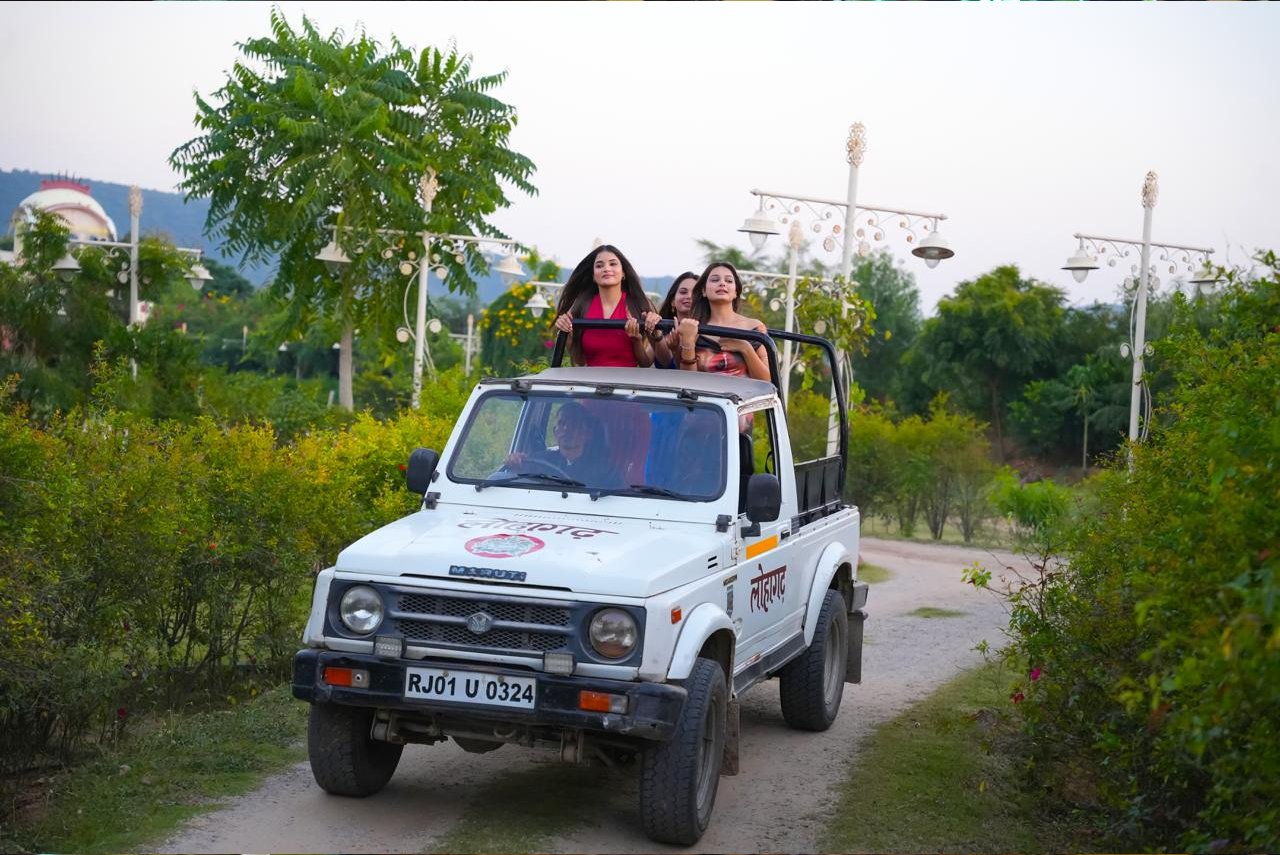
Lohagarh Fort Resort brings accommodation, celebration venues and resort experiences together within one very large resort campus. This allows couples to plan a wedding in which guests can stay, prepare, celebrate, dine, relax and participate in different functions without repeatedly travelling between separate properties.
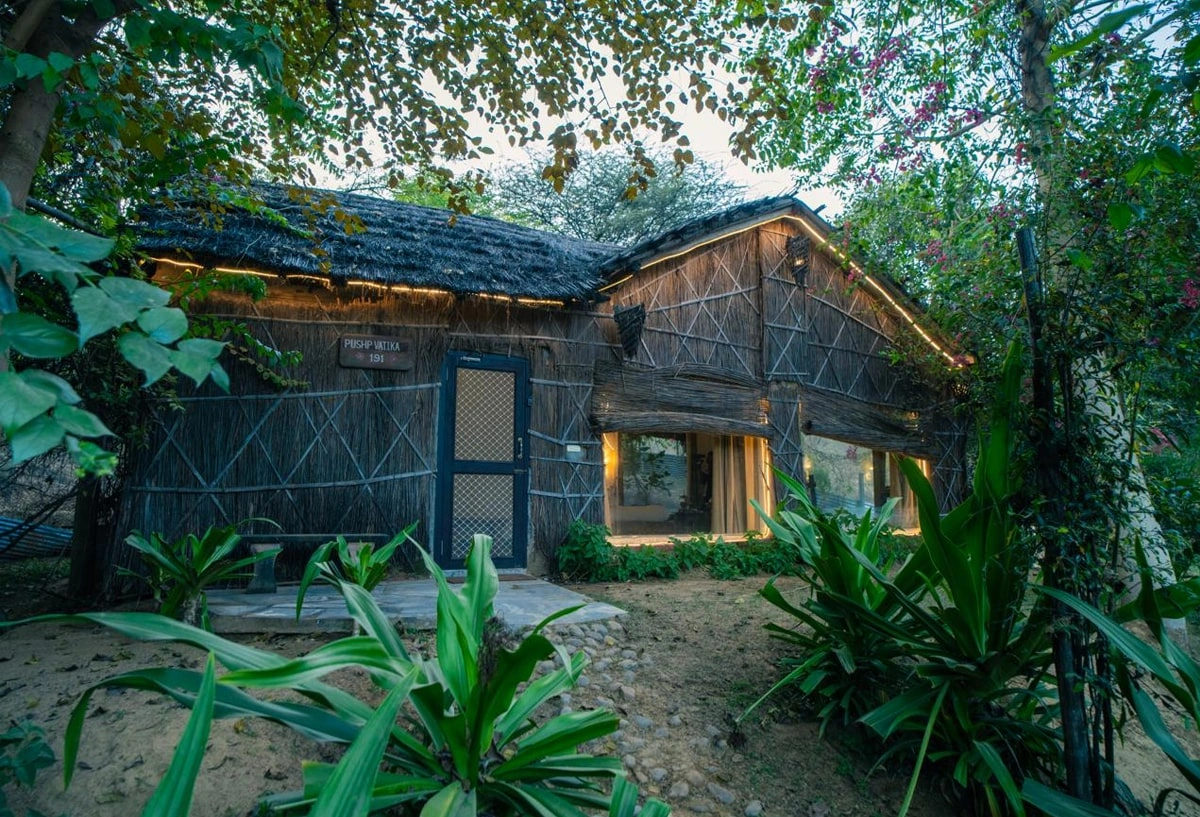
The resort offers 95 luxurious rooms, suites, villas and distinctive accommodation categories within the same campus. This variety can help families create a more considered room plan for couples, families, elderly relatives, close family members and guests with different accommodation preferences. Keeping the wedding group together also makes it easier for guests to return to their rooms between ceremonies, change for the next function or rest according to their personal comfort.
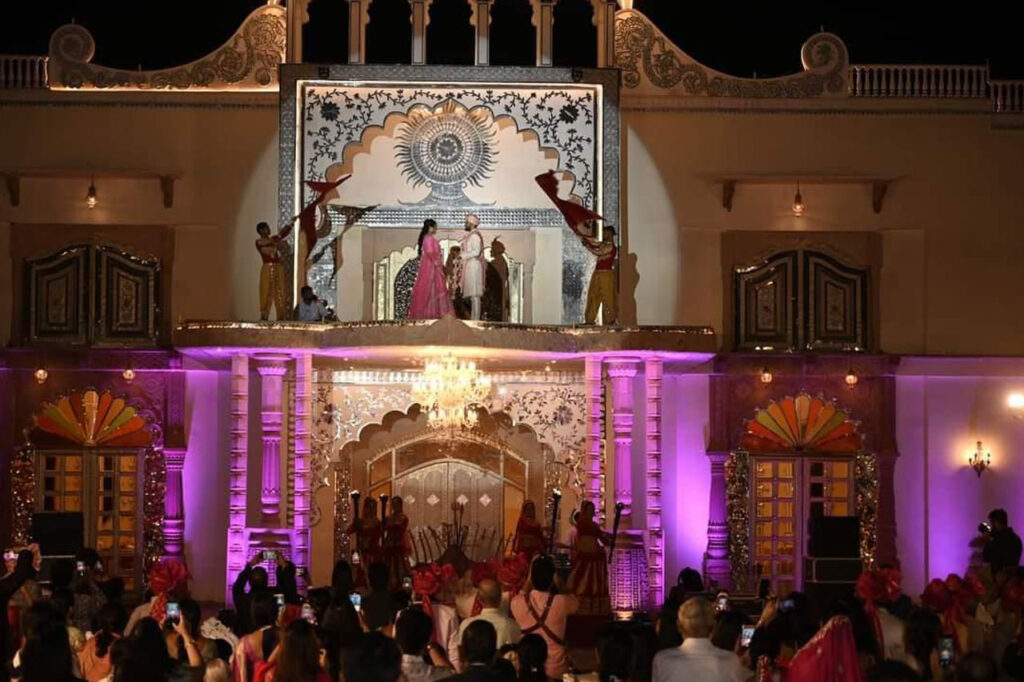
Couples looking for a destination wedding resort in Jaipur also need flexibility across different ceremonies. A haldi may feel most natural in a cheerful open setting, while the sangeet may require a separate atmosphere for performances and entertainment. The wedding ceremony, reception and intimate family gatherings may each have different spatial requirements. Lohagarh Fort Resort offers multiple indoor and outdoor wedding venues within the same campus, allowing different functions to be planned according to their character, format and expected guest numbers.
This availability of multiple venue options is particularly valuable because every wedding does not require the same type of space. An intimate family ceremony should not feel lost in an unnecessarily large area, while a larger celebration should not be forced into a venue that restricts guest movement or dining arrangements. The resort’s range of celebration spaces gives families the opportunity to select an appropriate setting for each event rather than using one venue for every function.
The experience also extends beyond rooms and ceremonies. Guests can enjoy resort activities and spend relaxed time together between scheduled events. These shared experiences can be especially meaningful during a destination wedding, where relatives and friends have travelled not only to attend a ceremony but also to spend time with one another. Leisure periods can help the wedding feel like a complete family getaway rather than a continuous sequence of formal functions.
For families evaluating a wedding resort in Jaipur, the relationship between accommodation and event spaces deserves the same attention as décor or menu selection. At Lohagarh Fort Resort, both remain part of one resort environment. This can support a more connected experience from guest arrival and room allocation to wedding functions, periods of rest and final departure.
The large campus also allows different parts of the celebration to develop their own atmosphere. Guests may experience one setting for a daytime ceremony and another for an evening event while remaining within the same resort. This balance between variety and convenience is valuable for multi-event weddings because it creates a sense of progression without introducing repeated road transfers.
Ultimately, the right resort for wedding in Jaipur should be assessed as more than a venue. It should be able to support accommodation, guest comfort, ceremony planning, internal movement and shared family experiences as interconnected parts of one celebration. Lohagarh Fort Resort offers the space, accommodation variety, multiple wedding venues and resort environment required to bring these elements together on the same campus.
For couples seeking a Premium Resort in Jaipur, the experience should extend beyond attractive rooms and beautiful wedding venues. The property should support comfortable accommodation, convenient guest movement, suitable spaces for different ceremonies and opportunities to relax between functions. Lohagarh Fort Resort brings these elements together within one large campus, helping families create a more connected celebration from guest arrival and preparation to the final ceremony and departure.
A Wedding Is a Complete Guest Journey
A destination wedding does not begin when the music starts or when the couple enters the ceremony venue. It begins when the first guest arrives with luggage, questions and expectations. It continues through room allocation, meals, preparation, ceremonies, moments of rest, informal family conversations and late-night returns. It ends only when the guests collect their belongings and depart.
When accommodation and wedding venues are separated, every stage of that journey requires an additional layer of transportation and coordination. Some weddings can manage this successfully, but families should understand the real cost, risk and effort involved before making that choice.
Keeping rooms and celebration spaces within the same well-planned resort can protect the wedding schedule, improve guest comfort, reduce travel dependency and give families more time to experience the celebration together. The most important benefit is not merely convenience. It is continuity—the feeling that from arrival to farewell, every guest remains part of one connected wedding experience.