July 17, 2026
Article Summary
Choosing a resort requires more than comparing room photographs, star ratings and amenity lists. This practical guide presents 15 important questions travellers should ask before booking, covering location, accommodation, activities, dining, safety, guest policies, reviews, seasonal conditions, hidden costs and service reliability. It also includes a weighted comparison scorecard, warning signs and a final booking checklist to help travellers select a resort that genuinely matches their holiday expectations.

The most successful resort holidays are rarely the result of choosing the property with the longest amenity list or the most impressive photographs. They happen when the resort’s location, atmosphere, accommodation, activities, dining and service style align naturally with the people taking the holiday. A property can be highly rated and beautifully designed yet still be the wrong choice for a particular family, couple or group.
This is why resort selection should begin with suitability rather than popularity. A peaceful nature retreat may be ideal for travellers seeking rest but inconvenient for guests planning daily city tours. A lively activity resort may delight families with children while disappointing a couple expecting uninterrupted privacy. The same resort can therefore be an excellent choice for one traveller and an unsuitable choice for another.
Searches such as “how to select best resort” often produce simple advice about location, amenities, rooms, reviews and price. These factors are important, but they become useful only when travellers know how to examine them, what questions to ask and which claims require confirmation. The following 15-question framework is designed to make that evaluation more reliable.
Why the Right Resort Matters More Than the Most Popular Resort
Resort websites and booking platforms are designed to help travellers imagine a holiday. They show attractive rooms, landscaped surroundings, pools, dining spaces and recreational facilities. What these photographs cannot easily reveal is how the property functions during an actual stay.
They do not explain whether rooms are far from the restaurant, whether advertised activities operate every day, whether a private event will affect quiet areas, or whether the least expensive room category resembles the accommodation featured most prominently online. These operational details frequently have a greater effect on guest satisfaction than visible luxury.
The purpose of comparing resorts is not to identify the property with the greatest number of features. It is to find the one where the available features will be relevant, accessible and genuinely enjoyable for the people travelling.
1. What Kind of Holiday Are You Actually Planning?
Before comparing properties, travellers should define the experience they want from the holiday. This first decision influences every choice that follows, including location, accommodation, meal plan, property size and activity requirements.
A sightseeing holiday requires convenient access to attractions and transport. A resort-focused holiday requires enough on-site experiences to make spending several days within the property enjoyable. A romantic escape may prioritise privacy and atmosphere, while a multigenerational family vacation may require larger accommodation, accessible pathways, varied dining and activities suitable for different age groups.
Create three categories before beginning the search:
- ✅Essential requirements without which the resort will not be suitable
- ✅ Preferred features that would improve the experience
- ✅ Attractive extras that are enjoyable but not necessary
A family room may be essential, for example, while a private pool may be preferred and a spa treatment may simply be an optional extra. This distinction prevents visual attractions from influencing the decision more than practical needs.
2. Is the Resort’s Location Suitable for Your Complete Itinerary?
Location should be evaluated through travel time and convenience rather than distance alone. Ten kilometres on a quiet road can be easier than five kilometres through heavy traffic, while a remote property may be perfect for a self-contained resort holiday but unsuitable for an itinerary involving several daily excursions.
Travellers should calculate the journey from the airport, railway station or arrival point and then examine the distance from places they intend to visit. Families with young children, elderly guests or large amounts of luggage should consider how the journey will feel after a long day of travel.
The surrounding environment matters as well. Some guests prefer being close to shopping, nightlife and tourist attractions, while others deliberately choose a resort outside congested areas for greater privacy, open space and quieter surroundings. The right location is the one that supports the planned rhythm of the holiday.
3. Does the Accommodation Match the Size and Composition of Your Group?
Room names are not standardised across the hospitality industry. A family room at one property may contain two separate sleeping areas, while another may simply add an extra bed to a larger standard room. Terms such as Deluxe, Premium, Luxury, Cottage, Suite and Villa can also represent very different layouts.
Travellers should examine the actual floor plan, number of fixed beds, bathroom arrangement, maximum occupancy and privacy available between sleeping areas. Families booking multiple rooms should ask whether those rooms can be allocated close together. Couples should determine whether the category provides the privacy, view or outdoor space they expect.
The following comparison can help identify the most appropriate accommodation format:
| Traveller Type | Accommodation Priorities |
|---|---|
| Couple | Privacy, bed configuration, quiet location and preferred view |
| Family with young children | Safe layout, fixed bedding, nearby facilities and adequate floor space |
| Family with teenagers | Additional privacy, separate sleeping areas and activity access |
| Multigenerational family | Accessibility, multiple bathrooms, nearby rooms and shorter walking distances |
| Friends or group travellers | Occupancy rules, separate beds, shared spaces and guest policies |
| Celebration guests | Proximity between rooms, event-area access and coordinated check-in |
The most expensive room is not automatically the most suitable. A well-configured family room can provide greater practical comfort than a visually impressive suite designed primarily for couples.
4. Are You Looking at the Exact Room Category You Will Receive?
Resort galleries often combine photographs from several accommodation categories. The most attractive villa, suite or private-pool room may appear throughout the website even when a traveller is considering the entry-level category.
Before paying, confirm that the photographs, room size, view and listed features belong to the exact category mentioned in the quotation. Ask whether the room is located on the ground floor or upper level, whether it includes a balcony or outdoor space, and whether features such as a Jacuzzi, private pool or particular view are guaranteed.
Recent guest photographs can provide additional perspective because they show the accommodation under everyday conditions. However, they should also be matched carefully with the relevant room category. Photographs from an upgraded suite should not be used to evaluate a standard room.
5. Will Every Member of the Group Be Comfortable?
A resort holiday can become difficult when the property is chosen around the preferences of only one traveller. Children, teenagers, adults and elderly family members often experience the same destination differently.
Children may need safe open spaces and engaging activities. Teenagers often appreciate independent recreation, sports and experiences that do not feel designed exclusively for younger children. Parents may value reliable dining, supervised spaces and opportunities to relax, while elderly guests may prioritise comfortable pathways, accessible rooms, quiet seating areas and shorter distances between facilities.
A suitable resort does not need every traveller to participate in the same activity. It should provide enough variety for people to enjoy the property differently while still creating natural opportunities for the group to spend time together.
6. Are the Advertised Activities Genuinely Available?
A long activity list can make a resort appear ideal, but availability may depend on the season, weather, maintenance schedule, minimum participation or additional payment. Some experiences may operate only at fixed times or require advance reservation.
Travellers should ask which activities are available during their exact stay dates and whether equipment, instructors or supervision are provided. Families should check age, height or safety restrictions before promising a particular experience to children.
It is useful to separate activities into four groups:
- ✅ Complimentary activities available throughout the stay
- ✅ Scheduled activities requiring advance registration
- ✅ Chargeable experiences
- ✅ Seasonal or weather-dependent activities
This prevents disappointment and allows families to estimate the real value of the stay. Five well-managed activities can create a better holiday than twenty facilities that are difficult to access or frequently unavailable.
7. Does the Dining Arrangement Support the Entire Stay?
Dining deserves greater attention when a resort is located away from a busy commercial area because guests may depend on the property for most meals. A short stay may work comfortably with limited options, while a longer vacation requires greater menu variety and flexibility.
Travellers should review meal-plan inclusions, restaurant timings, vegetarian choices, children’s food, allergy assistance, regional cuisine and room-service availability. They should also ask whether breakfast is buffet or fixed-menu, whether package meals have a limited selection, and how dietary requirements are communicated to the kitchen.
Food prices should be evaluated with the room tariff. An inexpensive room without meals may produce a higher total cost than a package that initially appears more expensive. For families, the convenience of reliable on-site dining can be as valuable as the accommodation itself.
8. What Safety and Guest-Entry Policies Does the Resort Follow?
The atmosphere of a resort is influenced by the people it welcomes, the events it hosts and the policies it enforces. A property may describe itself as family-friendly while simultaneously allowing activities or guest groups that create a very different environment.
Families should examine visitor rules, pool safety, outdoor lighting, access control, emergency assistance and the management of balconies, water features and recreational areas. They should also confirm whether the resort allows unrestricted outside visitors, STAG groups or late-night private parties near guest accommodation.
Safety cannot be judged by a single facility. It comes from the combination of property design, staff awareness, maintenance, communication and consistently enforced policies.
9. What Do Recent Reviews Consistently Reveal?
Overall ratings provide a quick impression, but review patterns reveal more. Travellers should focus on recent feedback and search within reviews for subjects directly connected to their priorities, including room condition, housekeeping, food, activities, accessibility, service response and noise.
Specific reviews are generally more useful than vague praise or criticism. A detailed review explaining the room category, travel period, group type and actual experience provides context that a one-line comment cannot offer.
Look for recurring themes rather than isolated incidents. If unrelated guests repeatedly praise the same service quality, activity programme or peaceful environment, it may represent a genuine strength. If similar complaints continue appearing across several months, the concern deserves attention even when the overall rating remains high.
The management’s response can also be informative. Professional replies that address concerns specifically demonstrate a different level of responsibility from standardised responses that avoid the issue.
10. What Is the Complete Cost of the Holiday?
The room rate displayed in search results is rarely the final cost. Taxes, meals, additional guests, extra beds, activities, transport, early check-in, late checkout and mandatory supplements can significantly change the amount payable.
Every shortlisted property should be compared using the same occupancy, travel dates and meal requirements. Without this standardisation, the lowest visible rate may appear more attractive simply because it excludes more services.
Use a table like the following before deciding:
| Cost Component | Resort A | Resort B | Resort C |
|---|---|---|---|
| Room tariff | |||
| Applicable taxes | |||
| Required meal plan | |||
| Extra-bed or child charges | |||
| Paid activities | |||
| Transportation | |||
| Mandatory supplements | |||
| Estimated total stay cost |
Travellers should also distinguish between price and value. A higher-priced resort can represent better value when it includes meals, activities, larger accommodation and experiences that would otherwise require additional travel and expenditure.
11. Are the Booking and Cancellation Conditions Clear?
Booking policies become important when travel plans change. Travellers should understand the cancellation deadline, refund amount, rescheduling conditions, no-show charges and the treatment of advance payments.
The phrase “free cancellation” does not necessarily mean a reservation can be cancelled at any time. It usually applies only until a specified date. Special packages, festival periods and peak-season bookings may have separate conditions.
A complete written confirmation should include:
- ✅ Resort name and address
- ✅ Check-in and checkout dates
- ✅ Exact room category
- ✅ Number and ages of guests
- ✅ Meal plan
- ✅ Included facilities or activities
- ✅ Taxes and additional charges
- ✅ Cancellation and refund conditions
- ✅ Total amount and payment schedule
Verbal promises concerning upgrades, views, nearby rooms or complimentary services should also be added to the written confirmation wherever possible.
12. Will Weddings or Private Events Affect Your Stay?
Resorts frequently host weddings, corporate retreats, celebrations and social events. These occasions may add energy to the property, but they can also influence noise, dining access, pool availability, parking and movement between accommodation areas.
Travellers should ask whether a large event is scheduled during their stay and which parts of the property will be used. The presence of an event does not automatically indicate inconvenience. A spacious and well-planned resort may successfully separate celebration zones from leisure areas.
The important question is whether the property has sufficient space, staffing and operational planning to support different guest groups without allowing one experience to disrupt another.
13. Is the Resort Suitable for Your Travel Season?
A resort can offer a very different experience across summer, monsoon and winter. Outdoor activities, pools, evening entertainment, landscaping, road conditions and dining arrangements may all be affected by the season.
Travellers should consider average temperatures, rainfall, daylight hours and the availability of seasonal experiences. They should also ask what alternatives are provided when outdoor activities cannot operate.
A resort with indoor games, covered areas, flexible dining and alternative recreational experiences may remain enjoyable during uncertain weather. The purpose is not to avoid seasonal travel but to understand how the property adapts when conditions change.
14. How Responsive Is the Resort Before Arrival?
Service begins long before check-in. The clarity and accuracy of pre-arrival communication can indicate how seriously the property treats guest requirements.
Travellers should observe whether enquiries receive specific answers, whether quotations clearly explain charges, and whether requests are recorded properly. A resort that provides inconsistent room information or avoids answering policy questions before payment may create similar communication difficulties after arrival.
Before booking, send two or three practical questions relevant to the stay. The quality of the response can reveal more than a generic brochure because it demonstrates how the team handles an actual guest requirement.
15. Which Resort Performs Best Against Your Real Priorities?
Once the shortlist has been reduced to two or three properties, travellers should use a weighted comparison rather than relying on memory. This prevents one visually attractive feature from overshadowing more important considerations.
Score each resort from one to five and multiply the score by the assigned weight:
| Selection Factor | Suggested Weight | Score |
|---|---|---|
| Suitability for the holiday purpose | 20% | /5 |
| Accommodation configuration | 15% | /5 |
| Location and travel convenience | 10% | /5 |
| Dining suitability | 10% | /5 |
| Activities and shared experiences | 10% | /5 |
| Safety and guest policies | 10% | /5 |
| Review and service consistency | 10% | /5 |
| Complete cost and value | 10% | /5 |
| Booking flexibility | 5% | /5 |
These weights can be changed according to the group. A family with children may give more importance to safety and activities, while a couple may increase the weight assigned to privacy and atmosphere.
The exercise does not replace instinct. It ensures that instinct is supported by evidence.
Resort Booking Red Flags Travellers Should Not Ignore
A single concern may have a reasonable explanation, but several warning signs together should lead to greater caution. Travellers should reconsider a booking when:
- ✅ Room photographs are not connected to specific categories.
- ✅ The final price changes repeatedly during communication.
- ✅ Important inclusions are provided only verbally.
- ✅ Recent reviews repeatedly describe the same maintenance problem.
- ✅ Activities are advertised without availability, timing or price information.
- ✅ Cancellation conditions remain unclear before payment.
- ✅ The resort avoids confirming whether events will affect the stay.
- ✅ Website information conflicts with the final quotation.
- ✅ The property pressures the traveller to pay before answering basic questions.
- ✅ The offer appears unusually inexpensive without explaining exclusions.
Transparency is one of the strongest early indicators of reliable hospitality. A resort that communicates clearly before receiving payment is more likely to manage expectations responsibly throughout the stay.
Applying the Framework at Lohagarh Fort Resort
This framework can be applied to Lohagarh Fort Resort in the same way it should be applied to any shortlisted property: by matching verifiable features with the requirements of the travelling group.
The resort’s 56.25-acre campus is relevant to travellers who value open surroundings, recreational space and a destination where significant time can be spent within the property. Its scale should still be considered alongside room location, mobility requirements and the distances guests are comfortable covering during the stay.
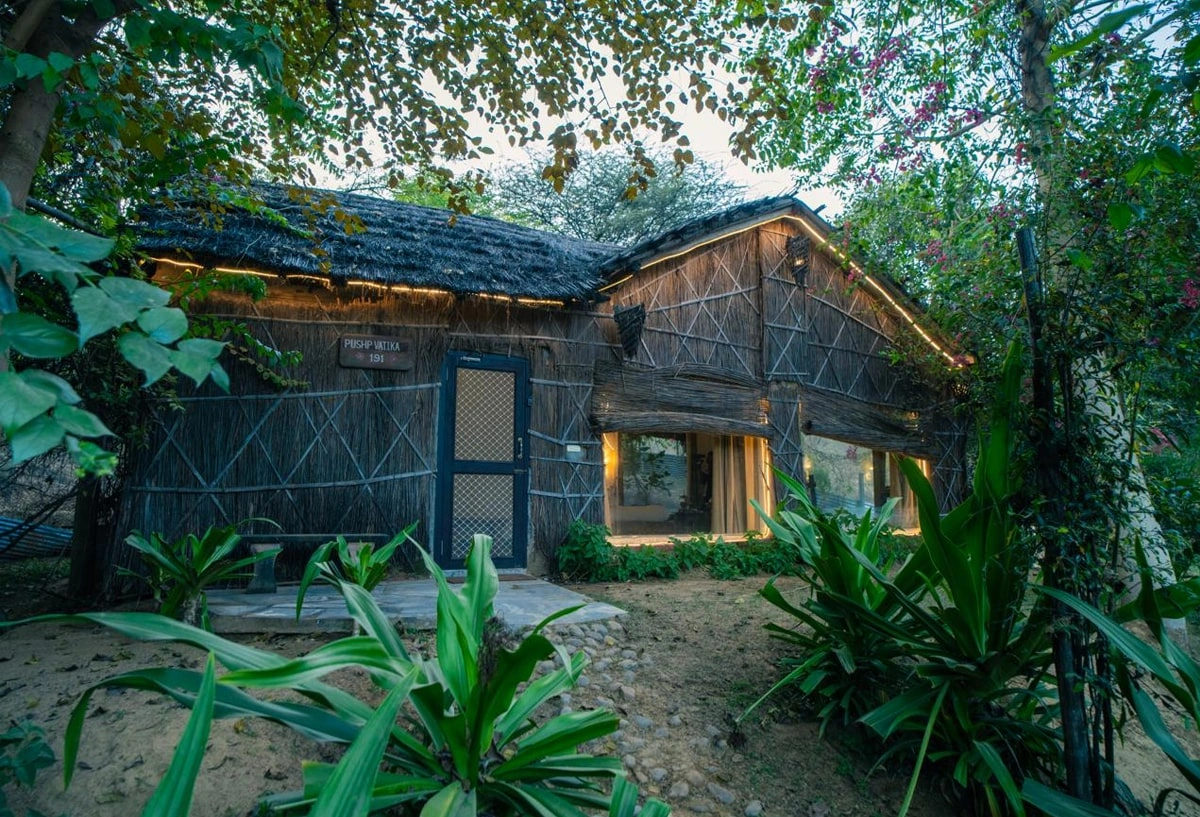
95 rooms, suites, cottages, luxury tents, themed stays and private-pool accommodation options allow different travellers to compare formats according to privacy, group size and occasion. Guests should confirm the layout and inclusions of their exact category rather than assuming that every accommodation type provides the same experience.
Available recreational options may include swimming, cycling, archery, badminton, cricket, table tennis, billiards, bird watching, horse riding, camel rides, open-jeep experiences and children’s play areas. Because some experiences may be scheduled, chargeable, seasonal or weather-dependent, availability should be confirmed for the intended dates.
Lohagarh Fort Resort has more than 23 years of hospitality experience and does not allow STAG entry, an operating policy that may be relevant to families seeking a more controlled leisure environment. Travellers who want to examine the property’s complete stay offering can visit the main Best Resort in Jaipur page while applying the same objective selection framework explained throughout this guide.
Final Pre-Booking Checklist
Before making the final payment, confirm that you have:
- ✅ Defined the purpose of the holiday
- ✅ Identified three non-negotiable requirements
- ✅ Checked the complete arrival and travel time
- ✅ Verified the exact room category
- ✅ Confirmed occupancy and bedding
- ✅ Reviewed dining inclusions
- ✅ Checked activity availability and charges
- ✅ Understood safety and guest-entry policies
- ✅ Read recent reviews relevant to your priorities
- ✅ Calculated the complete stay cost
- ✅ Reviewed cancellation and refund conditions
- ✅ Asked about scheduled private events
- ✅ Considered seasonal conditions
- ✅ Received important commitments in writing
- ✅ Compared shortlisted resorts using the same criteria
Completing this checklist takes less time than resolving a booking problem after arrival.
Final Thoughts
Choosing a resort should not be reduced to comparing star ratings, swimming pools and discounted room prices. A successful holiday depends on how naturally the property supports the people travelling, the reason for the trip and the experiences they hope to share.
The right resort provides more than attractive accommodation. It offers a suitable environment, reliable service, transparent policies and enough relevant experiences to make the time spent there feel worthwhile. By asking these 15 questions, verifying important claims and comparing complete value, travellers can replace guesswork with a decision that is both practical and personally meaningful.
Frequently Asked Questions
What is the most important factor when choosing a resort?
The most important factor is suitability for the purpose of the trip. Location, accommodation, activities and dining should all be evaluated according to how the travelling group intends to spend its time. A highly rated resort may still be unsuitable when its atmosphere, room configuration or location conflicts with the planned experience. Begin by identifying the group’s non-negotiable requirements before comparing prices or amenities.
How can travellers tell whether resort photographs are accurate?
Travellers should match photographs with the exact accommodation category mentioned in the quotation. They can compare official images with recent guest photographs and videos while checking room size, layout, view, bathroom design and outdoor features. If a specific feature is important, written confirmation should be requested. Resort-wide galleries should not be assumed to represent every room category available for booking.
How many resort reviews should be checked before booking?
There is no fixed number, but travellers should examine enough recent reviews to identify recurring patterns. Reviews should be filtered according to room condition, food, family experience, activities, service and the traveller’s intended season. Detailed reviews with photographs and specific observations are more useful than short ratings. Consistency across several independent reviews carries more significance than one extremely positive or negative experience.
Is the least expensive resort usually the best value?
Not necessarily. The lowest advertised price may exclude meals, taxes, activities, transportation or additional guest charges. Value should be calculated using the complete expected cost and the experiences included in that amount. A moderately higher rate may represent better value when it provides suitable accommodation, reliable dining, complimentary activities and enough on-site experiences to reduce other holiday expenses.
What questions should families ask before booking a resort?
Families should ask about room configuration, fixed beds, child charges, dining flexibility, activity age restrictions, pool safety, nearby room allocation, walking distances and guest-entry policies. They should also confirm whether large events will occur during the stay. These questions help families determine whether the resort can support children, parents and elderly relatives comfortably rather than simply advertising itself as family-friendly.
Should travellers book directly with a resort or through a booking platform?
Both methods can be suitable. Booking platforms make price and review comparisons easier, while direct communication may help travellers clarify room categories, special requirements and package inclusions. The final decision should be based on the complete price, cancellation protection, written confirmation and reliability of the booking channel. Travellers should never rely on verbal offers without receiving documented reservation details.
What should guests verify before booking Lohagarh Fort Resort in Jaipur?
Guests should confirm their exact accommodation category, occupancy, meal plan, activity availability, room location, applicable charges and cancellation conditions. Families and groups should also discuss nearby room allocation and mobility requirements. Lohagarh Fort Resort offers a large campus, varied accommodation and multiple recreational experiences, but the best package will depend on the group’s size, intended travel season and preferred way of spending the holiday.
Continue Exploring Lohagarh Fort Resort
Choosing the right resort becomes easier when travellers can examine its accommodation, experiences, family facilities and celebration spaces in greater detail. Explore the following resources to decide whether Lohagarh Fort Resort matches the purpose and expectations of your upcoming visit.
Want to Explore Lohagarh Fort Resort?
Discover the resort’s natural surroundings, accommodation experiences, dining, wellness facilities and distinctive hospitality philosophy.
Explore Lohagarh Fort Resort →
Planning a Family Vacation in Jaipur?
Learn how accommodation, recreational activities, open spaces, safety policies and experiences for different generations contribute to a more comfortable family holiday.
Explore the Family Vacation Guide →
Want to Compare Rooms, Suites and Private Stays?
Review the available rooms, luxury tents, cottages, themed suites, Jacuzzi accommodation and private-pool stay options before selecting the most suitable category.
View Rooms and Accommodation →
Looking for Activities During Your Resort Stay?
Explore the indoor games, outdoor recreation, nature experiences and family activities that guests may enjoy during their holiday.
Planning a Destination Wedding in Jaipur?
Explore indoor and outdoor wedding venues, guest accommodation, celebration spaces and facilities for intimate ceremonies and grand destination weddings.