July 27, 2026
Monsoon weddings have a distinctive atmosphere. The landscape looks refreshed, the temperature can feel more pleasant, and dramatic clouds can create beautiful backgrounds for wedding photography. In a resort surrounded by greenery, the season can make outdoor spaces appear especially vibrant. But behind that visual appeal lies a practical challenge: rain does not arrive according to the wedding itinerary.
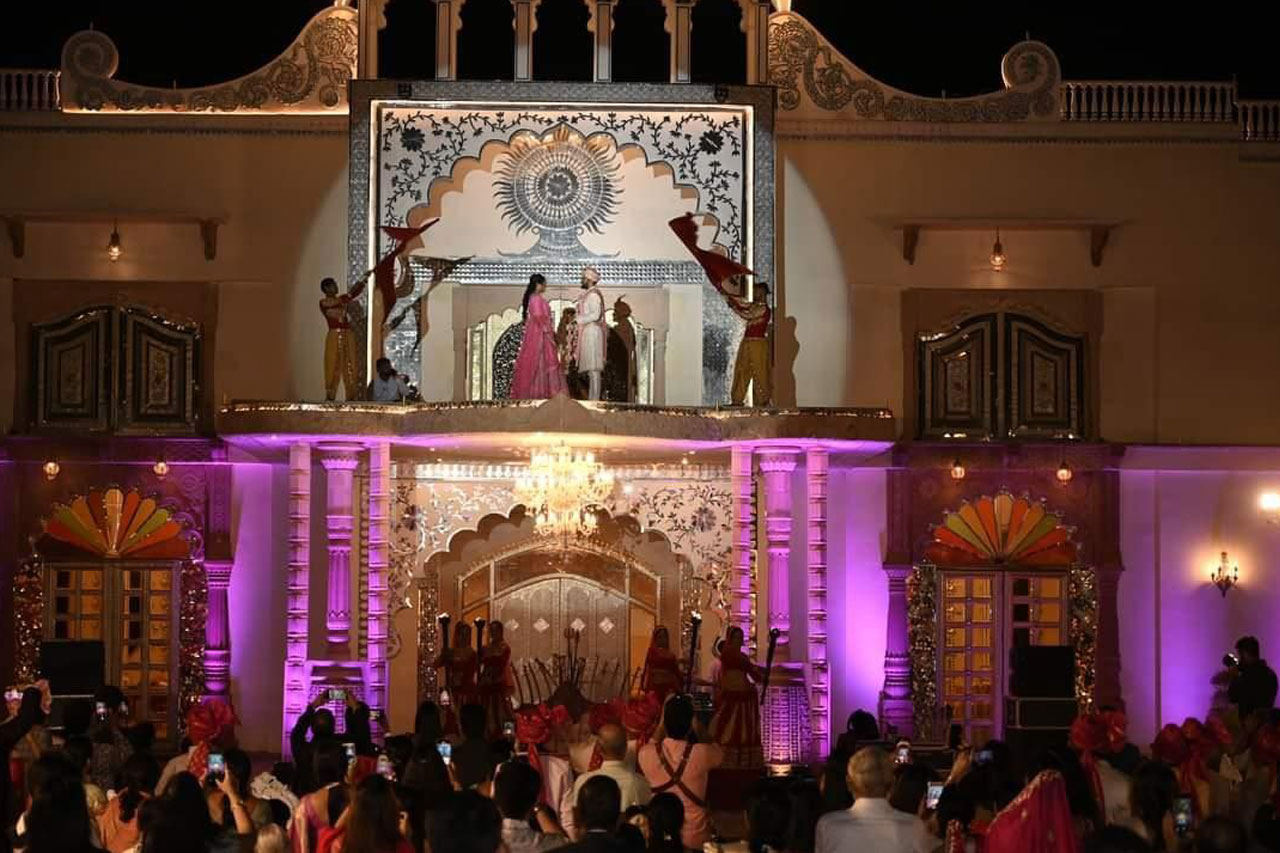
A ceremony planned for sunset may face an unexpected shower. A lawn may remain damp even after the rain stops. The baraat may be delayed, outdoor décor may require protection, and guests dressed for a formal celebration may find it difficult to move between separate locations. These are not reasons to avoid a monsoon wedding. They are reasons to select a property where weather-related changes can be managed without compromising the celebration.
This is where the difference between booking a wedding lawn and choosing a complete wedding resort becomes important. An outdoor venue may provide a beautiful setting, but a complete resort can support the entire celebration through indoor alternatives, accommodation, guest movement, event coordination and spaces suited to different wedding functions.
Why Rain Changes More Than the Outdoor Ceremony
When families think about rain affecting a wedding, they usually imagine the ceremony being moved from a lawn to a hall. In reality, the consequences can reach nearly every part of the event.
Décor teams may be unable to complete an outdoor installation on schedule. Sound and lighting equipment may need to be protected or relocated. Food service plans may have to change. Guest vehicles can arrive later than expected. Elderly relatives and young children may need safer, more comfortable movement arrangements. Bridal outfits, makeup, footwear and photography equipment also require additional protection.
Even a short shower can create a longer interruption. The rain may stop in 20 minutes, but chairs, carpets, pathways and electrical setups can remain affected. That is why a monsoon plan cannot depend only on the duration of the rainfall.
A well-prepared venue should help answer several questions before the wedding day:
 Which functions will remain indoors regardless of the forecast?
- Which outdoor events can be moved if conditions change?
- Is the alternative indoor venue suitable for the confirmed guest count?
- Can the stage, seating, dining and entertainment plan fit inside it?
- How much time is required to prepare the alternative venue?
- Who will make the final weather-related decision?
- How will guests be informed if the function location changes?
When these decisions are made in advance, rain becomes a manageable planning condition instead of a wedding-day crisis.
An Indoor Hall Alone Does Not Create a Monsoon-Ready Wedding
A property may advertise an indoor hall as a rain backup, but availability alone is not enough. The hall must actually support the size and format of the planned function.
Suppose an outdoor reception is being arranged for 450 guests. If rain makes the lawn unusable but the available indoor room accommodates only 150 people, the property technically has an indoor venue but not a workable alternative.
The same issue applies to layout. Published capacity generally indicates how many guests a venue can accommodate under a particular arrangement. A wedding requires more than chairs. The final plan may include a stage, dance floor, live entertainment, technical consoles, ceremonial areas, dining arrangements, décor installations and movement space for photographers and service teams.
Access points also matter. Guests should be able to enter without unnecessary congestion, while event staff need to manage supplies and operational movement. The route used by the couple, elderly relatives and young children must also be considered.
This is why couples evaluating an indoor wedding venue in Jaipur should examine its usable layout, access points and event flexibility alongside the published capacity.
How Lohagarh Fort Resort Supports Monsoon Wedding Planning
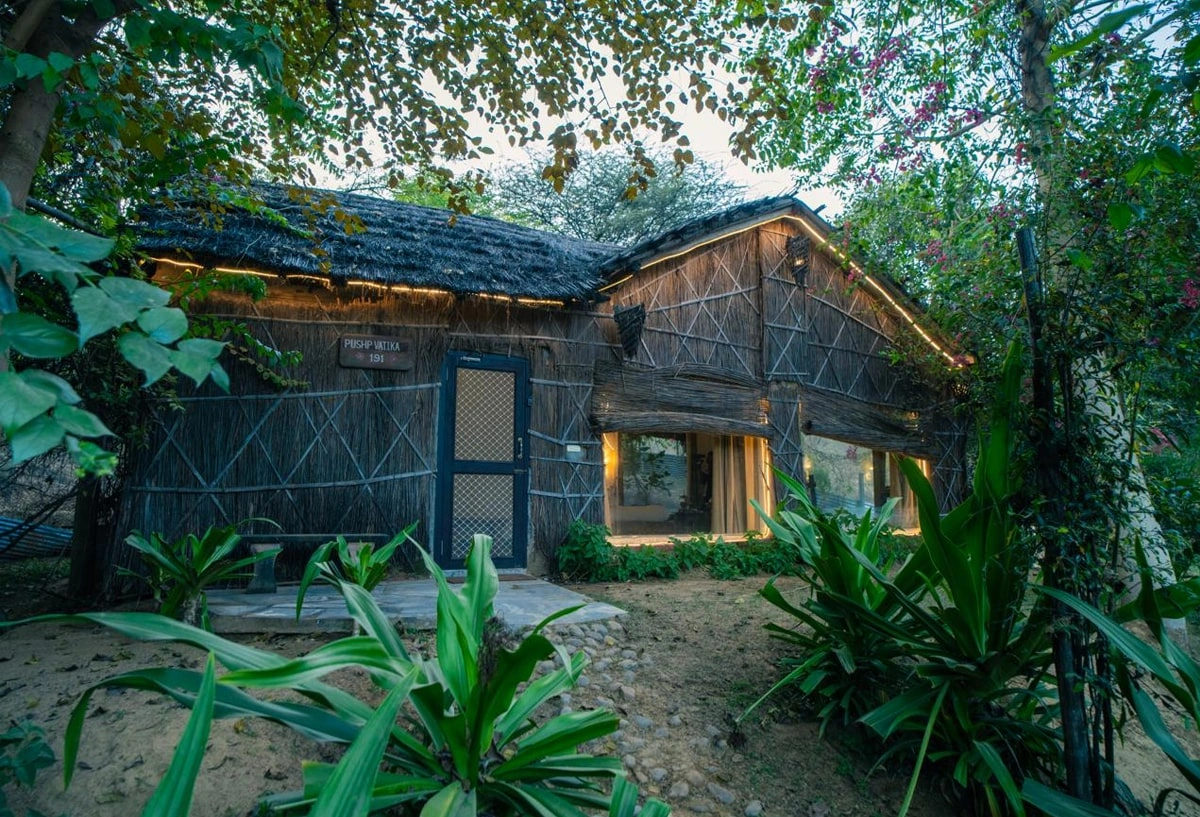
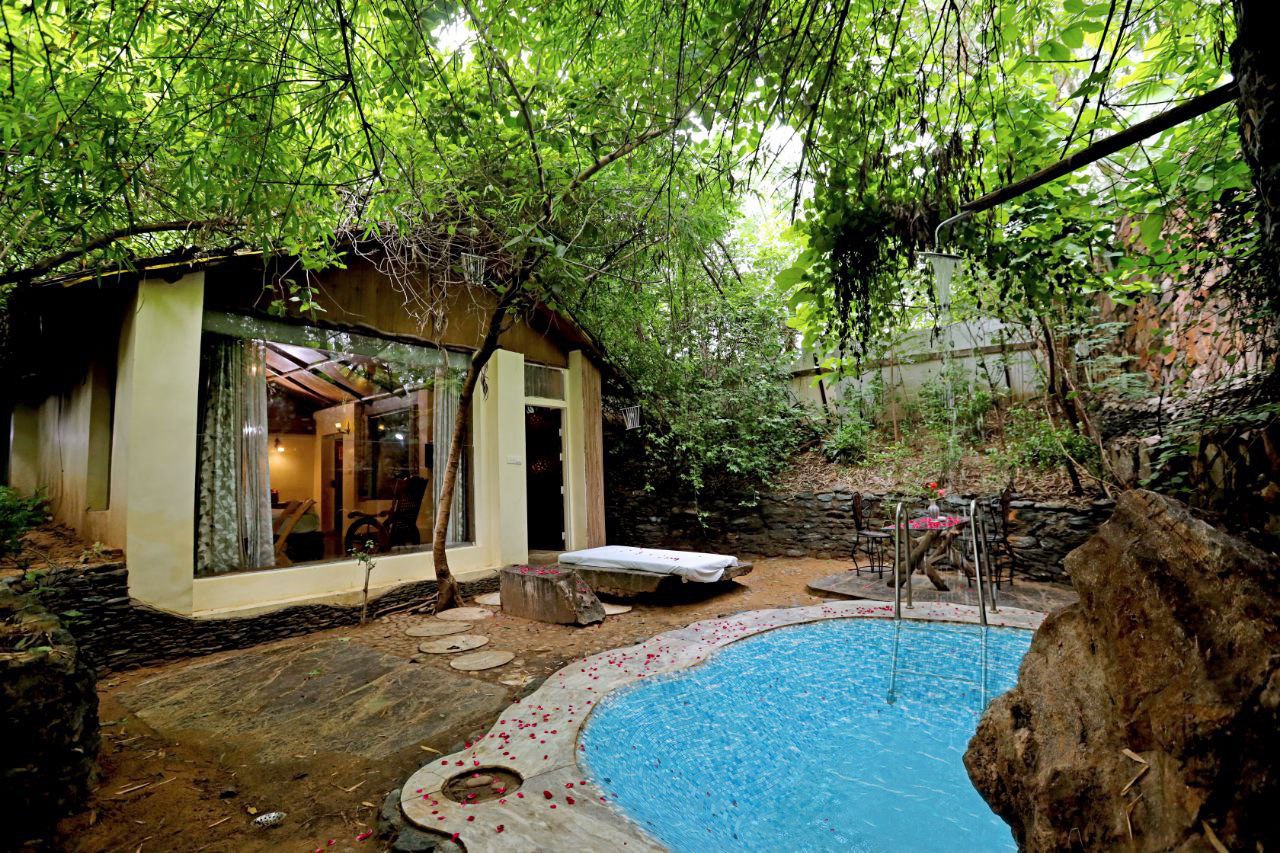
Lohagarh Fort Resort offers more than an isolated lawn or banquet hall. Its wedding environment brings together indoor and outdoor venues, luxurious rooms, suites and villas, guest activities and hospitality services within the same very large resort campus.
This integrated arrangement gives families greater flexibility when planning a multi-day celebration. A large function can be hosted in a grand banquet hall, a private ritual can take place in an intimate artistic venue, and outdoor spaces can be considered for functions where the weather and event plan allow. Accommodation within the resort keeps guests close to the celebrations and reduces dependence on repeated travel between separate hotels and wedding locations.
This becomes especially valuable during the monsoon. If a function is delayed, relocated or adjusted, guests staying within the property can be guided more efficiently than attendees dispersed across multiple hotels. Elderly relatives and families with children can return to their rooms between ceremonies. Guests also have resort activities and spaces to enjoy during gaps in the wedding schedule.
At Lohagarh Fort Resort, the two principal indoor wedding venues serve very different purposes:
- Maharaja Surajmal Banquet Hall supports large and grand celebrations of up to 500 guests.
- Sheesh Mahal provides an intimate artistic setting for functions of up to 40 guests.
Their difference in scale allows families to select a venue according to the nature of the function rather than using the same hall for every ceremony.
Choosing a monsoon wedding resort in Jaipur requires more than finding an attractive indoor hall. The property should offer suitable indoor and outdoor venues, on-site guest accommodation, flexible event layouts and a practical contingency plan for unexpected rain. Lohagarh Fort Resort supports these requirements through Maharaja Surajmal Banquet Hall for grand celebrations, Sheesh Mahal for intimate ceremonies and many luxurious rooms, suites and villas located within the same expansive resort campus.
Maharaja Surajmal Banquet Hall: A Grand Indoor Venue for Up to 500 Guests
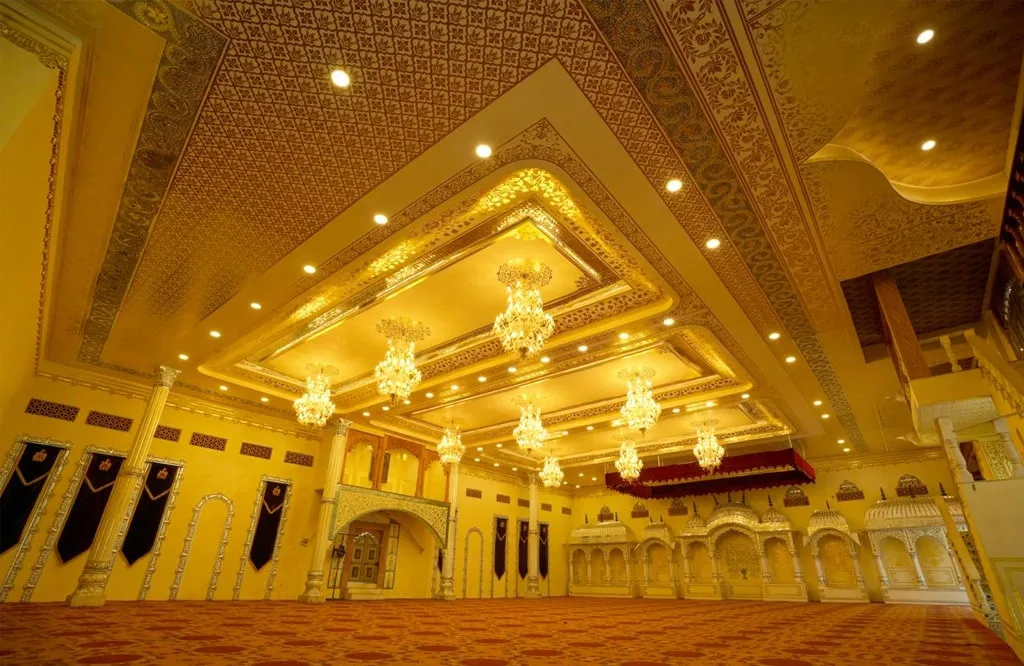
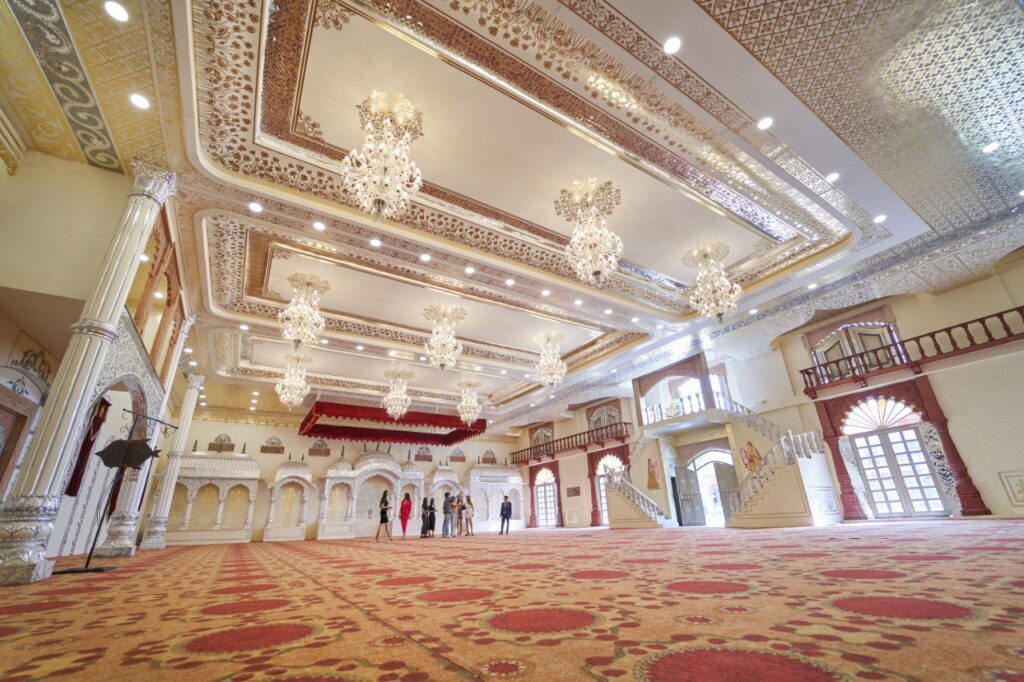
Maharaja Surajmal Banquet Hall is an 8,000-square-foot indoor celebration venue at Lohagarh Fort Resort. With a capacity of up to 500 guests, it can accommodate wedding receptions, sangeet nights, engagement ceremonies, indoor wedding functions and other large family celebrations.
The hall creates an immediate sense of scale. Multiple crystal chandeliers illuminate its high, elaborately detailed ceiling, while ornamental arches, traditional motifs and warm golden tones establish a regal character. Symmetrical staircases, balcony-style architectural sections and a richly designed ceremonial backdrop add visual depth to the interior.
These features mean the venue does not begin as a plain event box that must be visually rebuilt for a wedding. Décor teams can work with its existing chandeliers, ceiling details, arches and royal colour palette. Floral arrangements, stage elements and lighting can be selected to complement the architecture instead of covering it.
The spacious central floor also gives planners flexibility when developing the event layout. Depending on the function and final production plan, the hall can support:
- A wedding or reception stage
- Guest seating
- Sangeet performances
- A dance area
- Sound and lighting equipment
- Dining arrangements
- Wedding décor
- Photography and videography movement
- Operational pathways for the event team
The venue has two entry points, which can help organise guest access and event operations. During a large celebration, the way people and service teams move can affect the entire experience. A beautiful venue can still feel uncomfortable if entrances become congested or the layout leaves insufficient circulation space.
Why It Works During the Monsoon
Maharaja Surajmal Banquet Hall should not be treated only as an emergency room used after an outdoor plan fails. It can be selected as the primary venue for weather-sensitive functions from the beginning.
A sangeet night, for example, may involve rehearsed performances, a stage, specialised lighting, sound equipment and detailed technical coordination. Planning the function indoors protects the production plan from uncertain weather. A large reception similarly benefits from a stable environment where seating, décor, entertainment and food service can remain in place throughout the event.
For an outdoor celebration, the hall can also form part of a pre-approved contingency plan, provided its layout and setup requirements are finalised in advance. This is considerably safer than searching for an indoor solution only after rain begins.
Best suited for: Wedding reception, sangeet night, engagement ceremony, large indoor wedding function and grand family celebration
Area: 8,000 sq. ft.
Capacity: Up to 500 guests
Entry points: 2
Venue type: Indoor banquet hall
Sheesh Mahal: An Intimate Wedding Venue Defined by Mirror Art
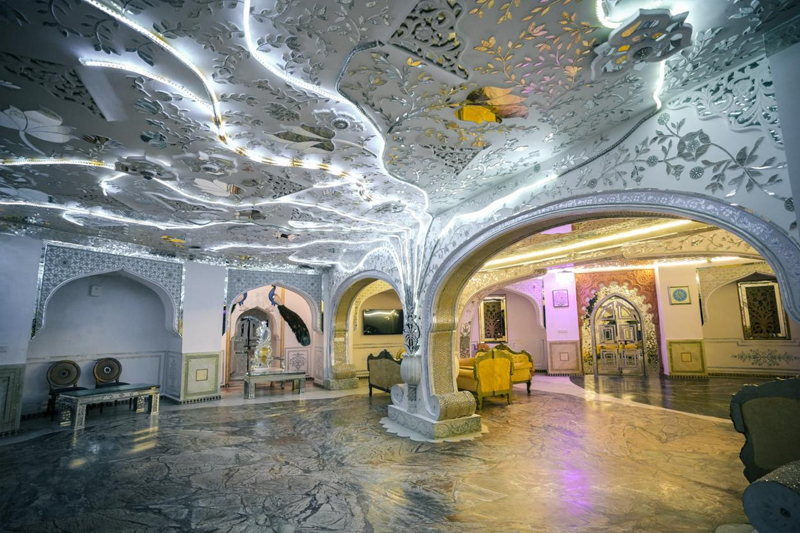
Large wedding functions need scale, but smaller ceremonies need closeness. A private ritual attended by 30 or 40 family members may lose its emotional character inside an oversized banquet hall. Sheesh Mahal provides a more appropriately scaled setting for such occasions.
The 1,500-square-foot indoor venue accommodates up to 40 guests and is suitable for intimate engagement ceremonies, private wedding rituals, close-family gatherings and smaller receptions.
Its identity comes from detailed mirror craftsmanship across the ceiling, arches, columns and surrounding surfaces. Floral patterns, leaves, birds and branching forms appear within the illuminated ceiling design. Sculpted, tree-like columns extend visually into the artwork above, while mirror-detailed arches and decorative wall treatments carry the artistic language throughout the interior.
The venue therefore feels immersive rather than conventionally decorated. Its visual character is part of the architecture, not a temporary layer added for an event.
This has a practical advantage for intimate celebrations. A smaller ceremony does not necessarily require a large décor installation to feel special. Carefully selected floral details, ceremonial seating and complementary lighting can work with the existing mirror artwork. The venue itself becomes part of the wedding experience and the photographic background.
Sheesh Mahal also has two entry points and multiple connected interior areas. These elements can support guest access and coordination while preserving the personal atmosphere expected from a close-family function.
Why Sheesh Mahal Is More Than a Smaller Banquet Space
Sheesh Mahal should not be described merely as an alternative for weddings with fewer guests. It offers a different kind of luxury.
In Maharaja Surajmal Banquet Hall, luxury is expressed through scale, chandeliers and grand architectural proportions. In Sheesh Mahal, it comes from artistry, detail and intimacy. Guests are close enough to observe the ceiling craftsmanship, decorative arches, mirror motifs and sculptural forms.
For a private engagement, family blessing ceremony or intimate reception, that closeness can make the experience more meaningful. The venue surrounds a smaller gathering without making it feel visually lost.
Best suited for: Engagement ceremony, intimate reception, private wedding ritual and close-family gathering
Area: 1,500 sq. ft.
Capacity: Up to 40 guests
Entry points: 2
Venue type: Luxury indoor venue
Choosing the Right Indoor Venue for Each Wedding Function
A multi-day wedding should not be planned as one event repeated in different clothes. Every function has a different guest count, emotional purpose and operational requirement.
| Wedding function | Recommended indoor option | Planning reason |
|---|---|---|
| Large wedding reception | Maharaja Surajmal Banquet Hall | Capacity for up to 500 guests with flexible event-layout possibilities |
| Sangeet night | Maharaja Surajmal Banquet Hall | Space for performances, technical equipment, guest seating and movement |
| Large engagement ceremony | Maharaja Surajmal Banquet Hall | Suitable for a formal celebration involving an extensive guest list |
| Intimate engagement | Sheesh Mahal | Artistic interior and appropriate scale for up to 40 guests |
| Private wedding ritual | Sheesh Mahal | Close setting suitable for immediate family members |
| Small family reception | Sheesh Mahal | Mirror craftsmanship provides a distinctive visual background |
| Outdoor function requiring an indoor alternative | Maharaja Surajmal Banquet Hall, subject to layout planning | Large weather-protected space that can be incorporated into the contingency plan |
The correct venue is not simply the largest available space. It is the one that matches the guest count, event format and desired atmosphere.
The Importance of Accommodation Within the Wedding Property
Monsoon conditions can make even short road journeys slower and less predictable. If wedding guests are staying across several hotels, each function depends on multiple vehicles, coordinated departure times and changing traffic conditions. One delayed group can affect the ceremony schedule.
Lohagarh Fort Resort has 90 luxurious rooms, suites and villas within the same resort campus as its wedding venues. Guests can stay and participate in the celebrations without repeatedly travelling between separate accommodation and event properties.
This setup is helpful during any multi-day wedding, but its value becomes greater during the rainy season. If the location or timing of a function changes, communication is easier when guests are already at the resort. Families with children can return to their rooms between events, and elderly relatives do not have to undertake unnecessary road journeys in uncertain weather.
Guests can also use the resort’s recreational experiences during free periods between ceremonies. This allows the wedding itinerary to include rest and leisure rather than filling every gap with transportation or waiting.
For families comparing a destination wedding resort in Jaipur, accommodation should therefore be evaluated as part of the event infrastructure—not as a separate booking requirement.
A Strong Rain Contingency Plan Must Exist Before the Wedding Day
A weather backup should be specific enough to implement. “We will move inside if it rains” is not a complete plan.
Before the wedding, the family, planner and venue team should confirm:
The alternative venue
The indoor space should be formally allocated for the relevant function. Families should not assume it will remain available without prior planning.
The indoor layout
A second layout should be prepared for the stage, seating, technical equipment, dining and ceremonial requirements. An outdoor design cannot always be transferred indoors without modification.
The decision deadline
The venue and décor teams need enough time to prepare the alternative space safely. A final decision made after guests begin arriving can create unnecessary confusion.
The decision-maker
One authorised family representative should coordinate with the event and venue teams. Conflicting directions from multiple relatives can delay the transition.
Guest communication
If a function location changes, attendees should receive a single, clear instruction. Guests staying within the resort can be updated and guided more efficiently.
Technical protection
Sound equipment, lighting systems, power connections and decorative electrical elements must be protected from rain and damp conditions. Safety must take priority over preserving an outdoor setup.
Essential ceremonial elements
The couple and planner should identify which décor and ceremonial features must be recreated indoors and which can be simplified. This prevents the team from attempting an unrealistic last-minute transfer of every outdoor element.
Guest Comfort Is the Real Measure of Monsoon-Wedding Luxury
Weddings are multi-generational gatherings. A short walk through light rain may seem manageable to young guests but can be uncomfortable for grandparents, small children or anyone wearing formal wedding attire.
Guest experience depends upon the details surrounding the venue: how people arrive, how far they need to walk, where they wait, how quickly they receive information and whether the function space is prepared before they enter.
The same principle applies indoors. A hall should not be filled to the point that seating, dining and guest movement become difficult. Published capacity should be considered alongside the stage size, décor plan and event format.
Real luxury is not measured only through chandeliers, floral installations or photographs of an empty venue. It is visible in how comfortably the property supports every guest while the wedding is in progress.
Outdoor Beauty and Indoor Security Can Work Together
Planning for rain does not require families to abandon outdoor celebrations altogether. The better approach is to identify which functions can benefit from an outdoor setting and which should receive the security of an indoor venue.
A daytime gathering or flexible social event may be easier to adjust than a sangeet involving extensive technical production. Similarly, a function with a smaller guest list may be relocated more easily than a reception for several hundred attendees.
At Lohagarh Fort Resort, outdoor settings can remain part of the wedding vision while Maharaja Surajmal Banquet Hall and Sheesh Mahal provide indoor options for different guest counts. This allows the celebration to respond to the season without depending entirely upon it.
The goal is not to choose between outdoor beauty and indoor certainty. It is to design a wedding in which both are connected through a realistic operational plan.
Why a Complete Resort Setup Makes the Difference
A banquet hall protects a function. A complete resort supports the entire wedding.
Lohagarh Fort Resort brings large and intimate indoor venues, outdoor celebration spaces, luxurious accommodations, guest activities and hospitality services together within one very large campus. This helps families plan the wedding as one connected experience rather than coordinating separate hotels, venues and guest movements.
Maharaja Surajmal Banquet Hall provides the scale required for grand indoor celebrations of up to 500 guests. Sheesh Mahal offers a mirror-crafted environment for intimate functions of up to 40 guests. Accommodation within the resort keeps attendees near the celebrations, while multiple venue formats give planners more flexibility across a multi-day itinerary.
For families looking for a wedding resort in Jaipur, this complete setup becomes especially important during the monsoon. It does not prevent rain, but it reduces the number of wedding arrangements that depend upon clear weather.
Final Planning Perspective
A memorable monsoon wedding is not created by ignoring the forecast or fearing it. It is created by planning intelligently around uncertainty.
The right property should allow the wedding to continue with the intended comfort, atmosphere and dignity even when conditions change. That requires more than an available roof. It requires an indoor venue of the correct capacity, a workable layout, clear decision-making, coordinated accommodation and an experienced operational response.
At Lohagarh Fort Resort, Maharaja Surajmal Banquet Hall and Sheesh Mahal support two very different kinds of indoor celebration. One provides grand scale beneath chandeliers and regal architecture; the other surrounds an intimate gathering with intricate mirror artistry. Together with accommodation and other wedding spaces within the resort, they help transform monsoon planning from a last-minute reaction into a considered wedding strategy.
The weather may change during the celebration. The quality of the wedding experience should not.